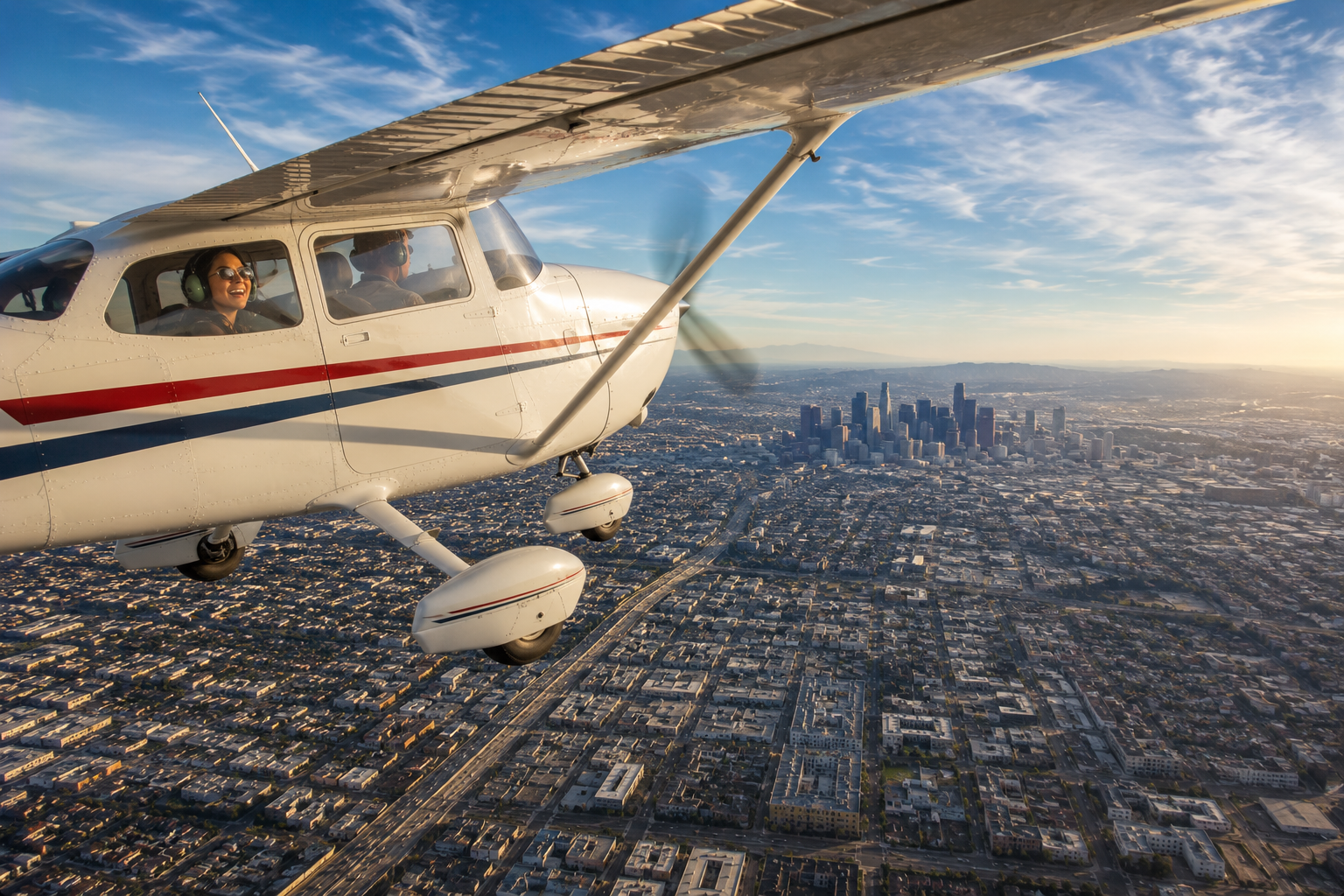
If you’re curious about stunt plane rides but have no idea what actually happens once you arrive at the airport, you’re not alone. Many people researching an aerobatic flying experience want to know what an aerobatic experience really feels like before booking. During this aerobatic flying adventure, you’ll ride in the back seat of a Pitts S-2B while an FAA-certified instructor performs every maneuver. Unlike a scenic flight, an aerobatics flight experience is designed around loops, rolls, and the thrill of controlled aerobatic flying.
This is not a flight lesson and not a Discovery Flight. The instructor remains in command of the aircraft at all times while you experience the full sequence from the rear cockpit. In this guide, you’ll learn what aerobatic flying is, how the Pitts S-2B works, what the maneuvers feel like, what happens step by step, how to prepare, important safety considerations, and how to book an aerobatic flying experience over Los Angeles.
What Is Aerobatic Flying?
So, what is aerobatic flying?
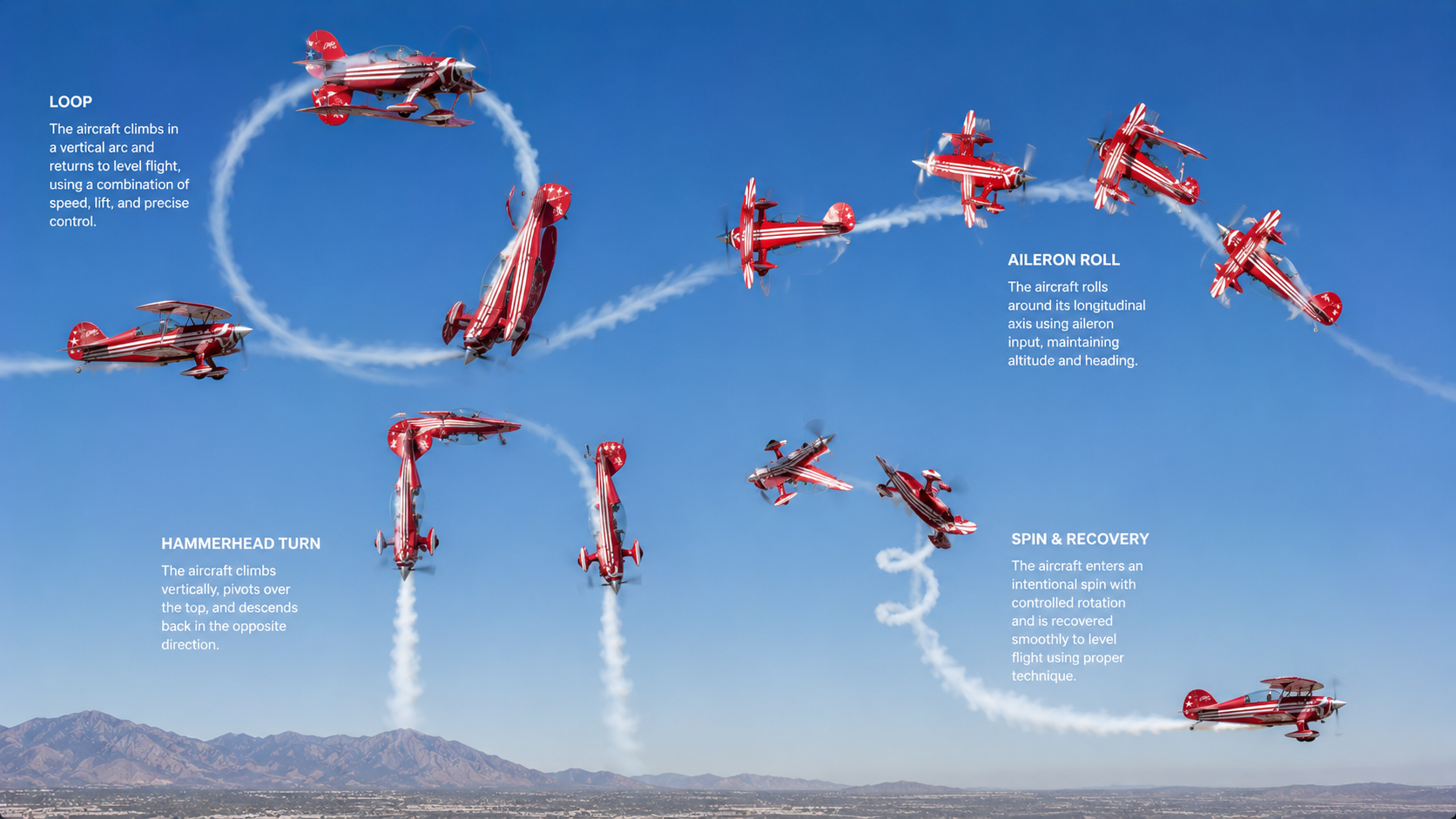
Aerobatic flying is intentional, precisely controlled flight that takes an aircraft beyond normal straight-and-level cruising through maneuvers such as loops, rolls, hammerheads, and spins, performed for sport, airshow performance, advanced pilot training, and passenger thrill rides. For more than a century, aerobatics have been part of aviation culture, built around precision flying and the limits of specially designed aircraft. Unlike a scenic flight, where the pilot focuses on sightseeing and smooth, level flight, or a Discovery Flight, where participants may briefly take the controls as part of an instructional experience, an aerobatic flying experience is centered on the maneuvers themselves. During an aerobatic experience, the FAA-certified instructor performs every maneuver while the passenger rides in the rear cockpit and experiences each climb, roll, and G-force throughout the flight.
The Aircraft: Pitts S-2B Aerobatic Biplane
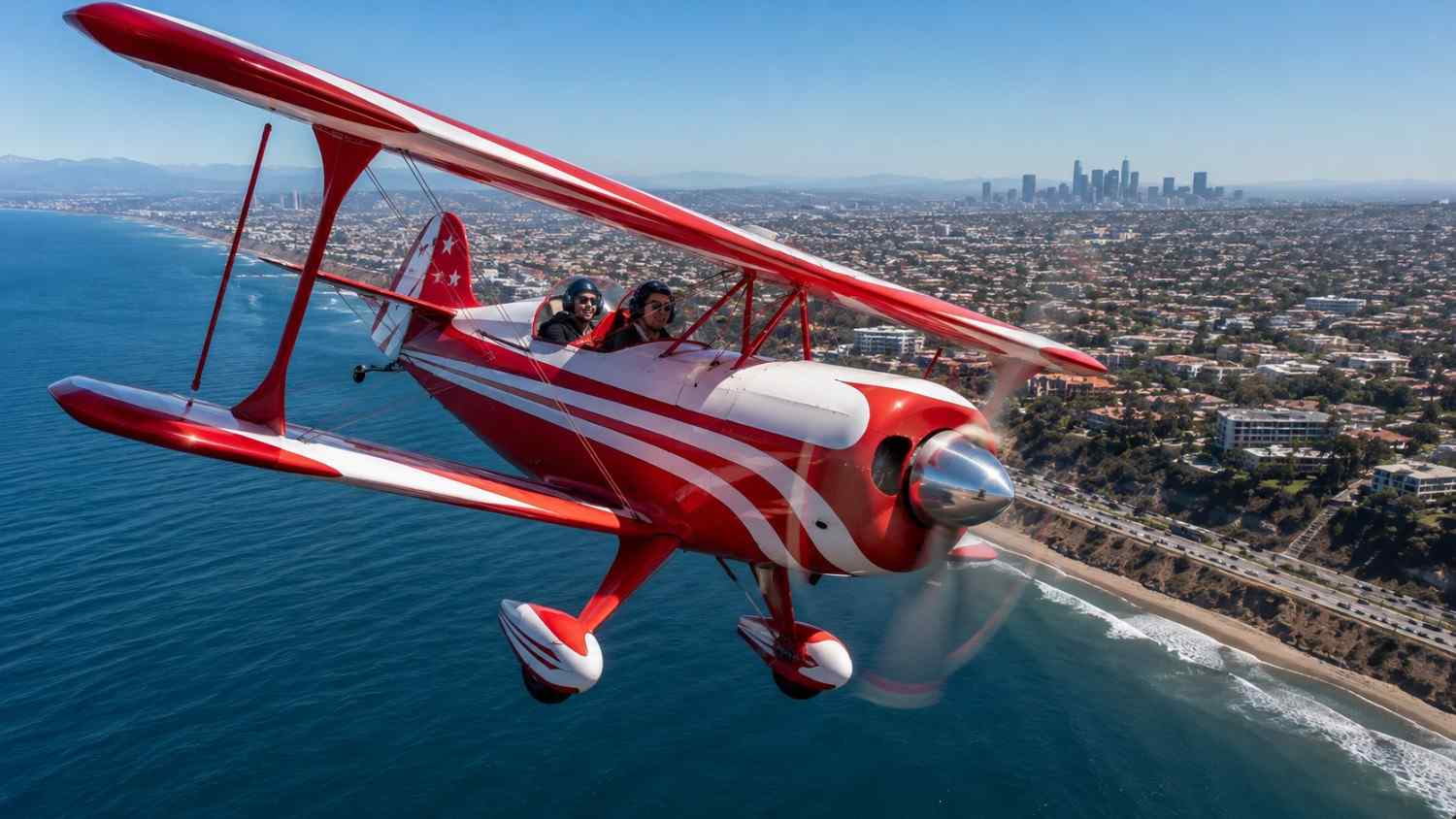
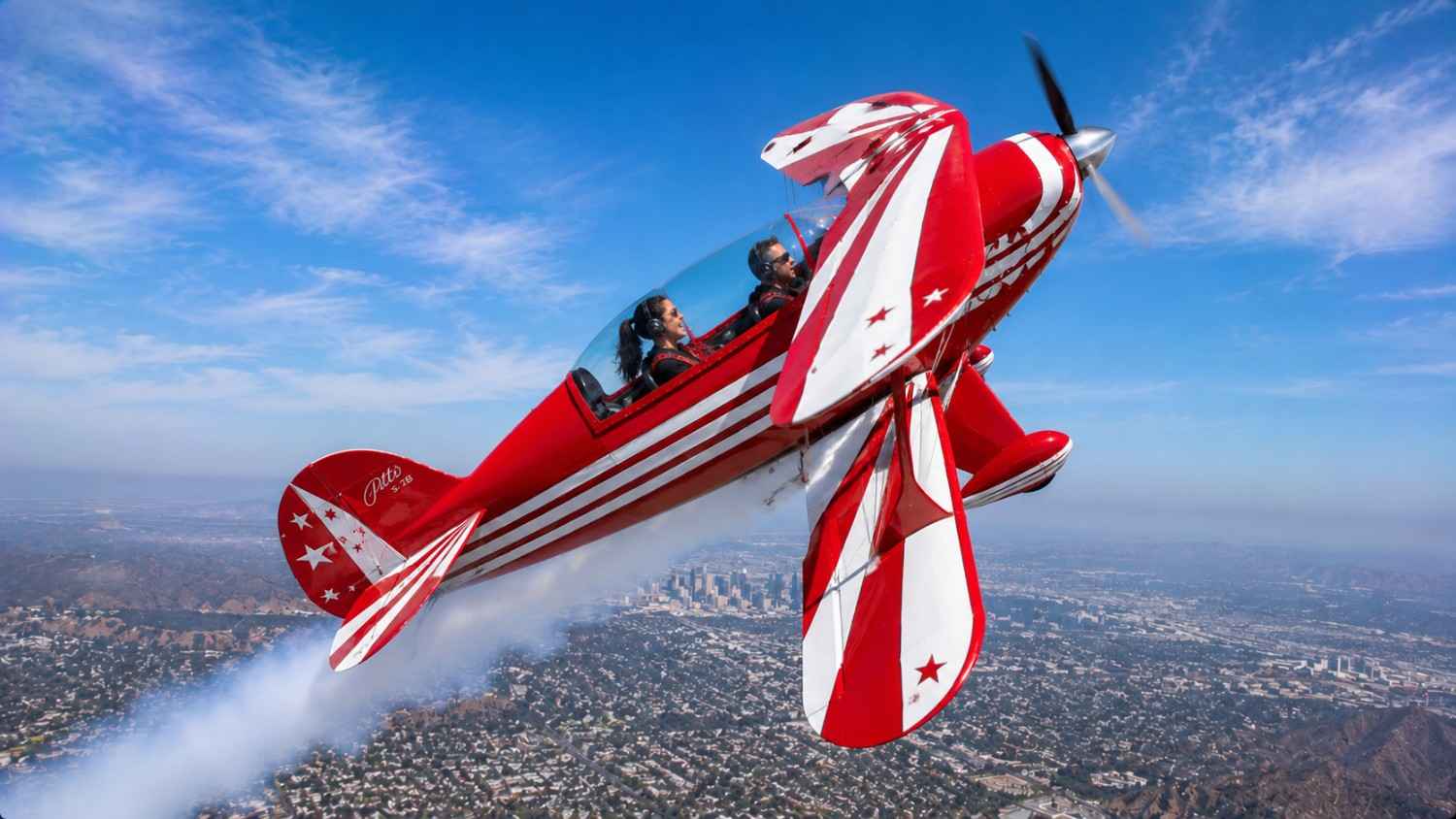
The Pitts S-2B is a purpose-built, two-seat aerobatic biplane designed specifically for loops, rolls, hammerheads, and other precision maneuvers. Powered by a 260-horsepower engine and capable of speeds approaching 200 mph, it is built for the demands of aerobatic flying rather than general flight training, making it a popular aircraft for aerobatic airplane rides and stunt plane rides.
Unlike a modified trainer, the Pitts S-2B features symmetrical wings that perform consistently whether the aircraft is upright or inverted, along with an inverted fuel and oil system that allows the engine to operate normally throughout aerobatic sequences. Its highly responsive controls give the pilot the precision needed to perform smooth, controlled maneuvers.
The aircraft uses a tandem cockpit layout with the FAA-certified instructor in the front cockpit and the passenger in the rear. This configuration provides an unobstructed view of the sky and horizon during aerobatic plane rides, allowing passengers to fully experience each climb, roll, and maneuver throughout the aerobatic flying experience.
To learn more about the aircraft’s design and specifications, visit meet the Pitts S-2B.
What to Expect, Step by Step
Knowing what happens before, during, and after the flight can make an aerobatic flying experience feel much more approachable. While every flight is unique, the overall process follows a clear sequence from arrival to landing.
1. Arrive at Van Nuys Airport
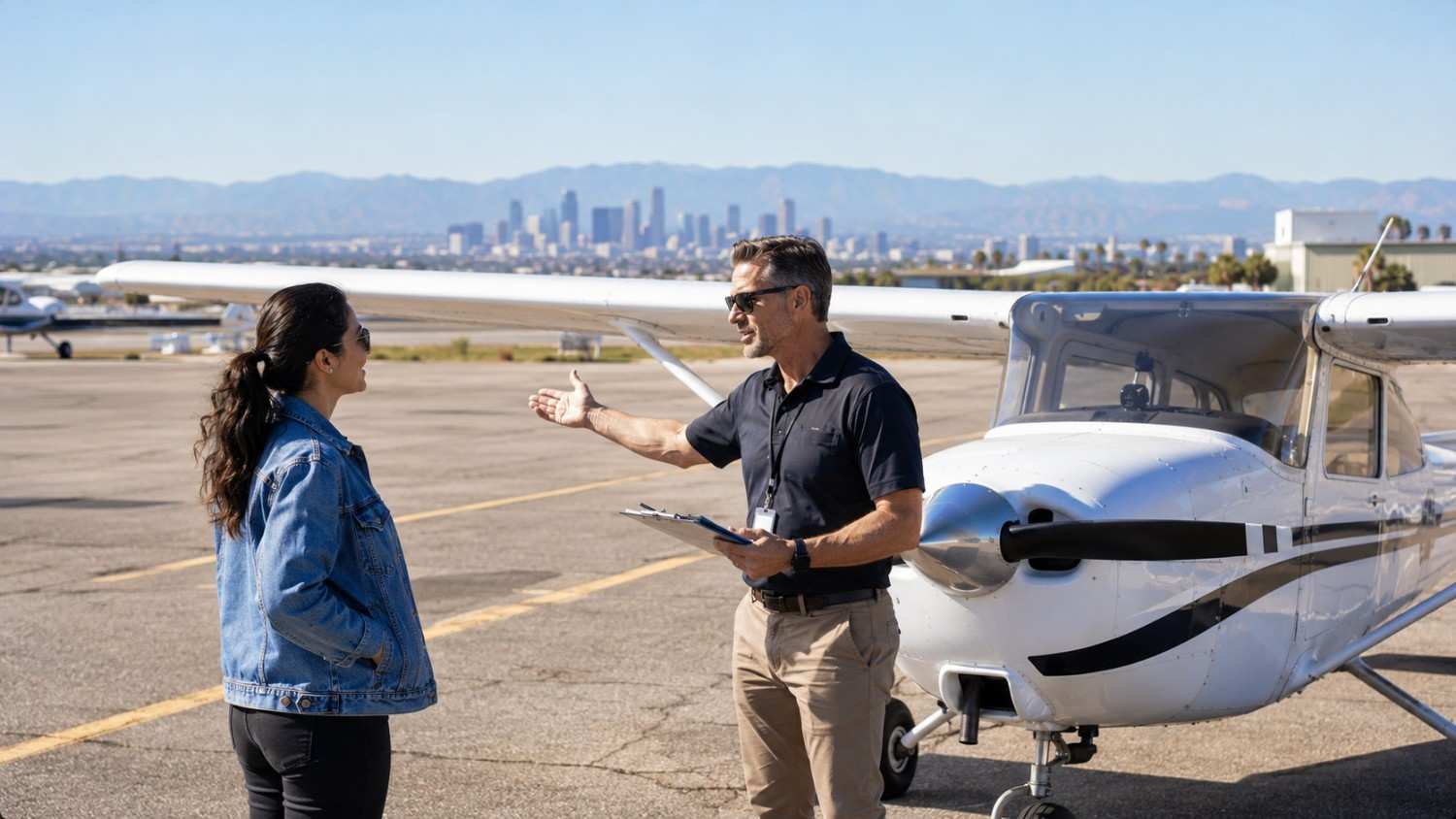
Your experience begins at Fly Over LA’s hangar at Van Nuys Airport (KVNY). After checking in, you’ll meet your FAA-certified instructor and have an opportunity to ask questions before the flight begins.
2. Attend the Pre-Flight Safety Briefing
Before approaching the aircraft, your instructor will review the planned maneuver sequence, expected G-forces (the increased force you feel during acceleration and turns), communication procedures, hand signals, and the process for returning to straight-and-level flight if needed. This briefing helps you understand exactly what to expect before takeoff.
3. Walk Around the Pitts S-2B
Next, you’ll get an up-close look at the Pitts S-2B. Your instructor will point out key aircraft features, explain the tandem cockpit layout, and show you the five-point harness and noise-canceling headset used during the flight.
4. Strap Into the Aircraft
You’ll board the rear cockpit and secure the five-point harness. The fit is intentionally snug and designed to keep you comfortable and secure throughout climbs, rolls, and positive G-force maneuvers. Once your headset is on, you’ll be able to communicate with your instructor throughout the aerobatic experience.
5. Taxi and Take Off
As the Pitts S-2B taxis to the runway, you’ll begin to notice how responsive the aircraft feels. After takeoff from Van Nuys Airport, the aircraft accelerates quickly and climbs over the Los Angeles Basin toward the altitude needed for the aerobatic sequence.
6. Experience the Aerobatic Sequence
Before each maneuver, the instructor explains what is coming next over the headset. A loop carries the aircraft through a full vertical circle. An aileron roll rotates the aircraft around its lengthwise axis. A hammerhead begins with a vertical climb before the aircraft pivots and descends back toward level flight. Throughout the aerobatics flight experience, the instructor remains in command of the aircraft at all times. This is a passenger ride, not a flight lesson.
7. Return to Van Nuys Airport
After the maneuver sequence, the aircraft transitions back to normal flight for the return to Van Nuys Airport. The smoother ride back gives you time to take in the view and reflect on the experience before landing.
8. Complete the Post-Flight Debrief
After landing, you’ll meet briefly with your instructor to review the flight and discuss the maneuvers you experienced. By the end of the debrief, you’ll have a clearer understanding of what makes stunt plane rides and an aerobatic flying experience different from traditional sightseeing flights.
What the Maneuvers Actually Feel Like
During an aerobatic flying experience, the maneuvers often feel very different from what passengers expect. While every person experiences them a little differently, most describe the sensations as surprising, controlled, and easier to manage than they imagined.
Loop: A loop carries the aircraft through a full vertical circle. As the nose rises, positive G-force (the increased force you feel during acceleration) presses you firmly into the seat. Near the top, the sky fills the canopy and the horizon briefly disappears before the aircraft returns smoothly to level flight.
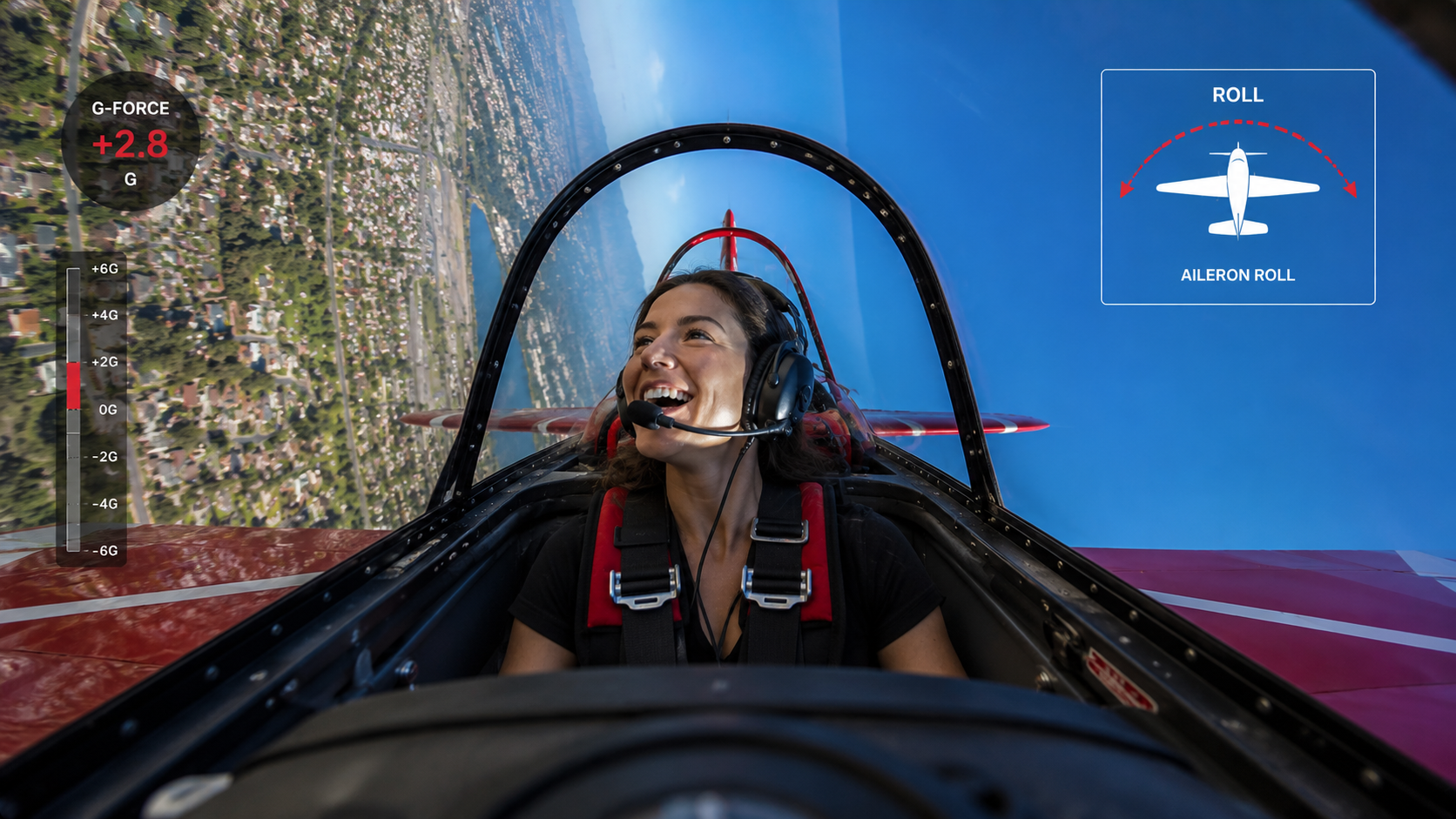
Aileron Roll: An aileron roll rotates the aircraft around its lengthwise axis. The horizon rolls around the cockpit, creating a brief feeling of lightness before the aircraft settles back into normal flight.
Hammerhead: A hammerhead begins with a vertical climb at full power. Near the top, there is a brief moment of stillness before the aircraft pivots and points back toward the horizon. The rapid change in direction makes it one of the most visually dramatic moments of many stunt plane rides.
During a typical aerobatic stunt flying experience, passengers usually experience positive G-forces in the range of approximately +3G to +4G. In practical terms, your body may briefly feel three to four times heavier than normal. The five-point harness and seat keep you securely positioned throughout the maneuver sequence, and most people find the sensation surprising but manageable.
Throughout the aerobatic experience, the instructor explains each maneuver before it begins and remains in communication through the headset. If you feel uncomfortable at any point, the aircraft can return to straight-and-level flight before continuing.
If you’re interested in learning more about the excitement and visual side of aerobatic flying, experience the thrill of aerial acrobatics over Los Angeles.
How to Prepare: What to Eat, Wear, and Bring
Preparing for an aerobatic flying experience is straightforward. A few simple steps can help you stay comfortable and ready to enjoy the flight.
- Eat lightly 2–3 hours before your flight. Crackers, fruit, toast, and other plain carbohydrates are good options. Avoid heavy, greasy, or spicy foods immediately before takeoff.
- Stay hydrated and skip alcohol for the day. Drinking water throughout the day can help you feel more comfortable during the aerobatic experience.
- Wear comfortable, close-fitting layers. Avoid loose scarves, oversized jackets, or dangling accessories that could interfere with the cockpit environment.
- Choose closed-toe shoes. Comfortable footwear is recommended for all passengers.
- Skip perfume or strong cologne. The compact cockpit can make scents feel much stronger than they do on the ground.
- Bring a government-issued photo ID. If you’d like to relive the flight later, a GoPro video add-on is available for $49.99.
- Arrive a few minutes early. The pre-flight briefing is part of the experience and gives you time to meet your instructor, review the plan for the flight, and get settled before takeoff.
Whether you’re booking your first aerobatic flying experience or exploring stunt plane rides as a gift, a little preparation can help you make the most of the day.
Is an Aerobatic Ride Safe?
For many first-time passengers, safety is the biggest question—and an important one. While aerobatic flying involves maneuvers beyond normal cruising flight, Fly Over LA conducts its aerobatic flying experience using a Pitts S-2B operated by FAA-certified instructors and maintained to FAA airworthiness standards.
Key safety measures include:
- FAA-certified instructors who remain in command of the aircraft at all times.
- Pre-flight aircraft inspections and weather reviews before every flight.
- Flight rescheduling when conditions are not appropriate for aerobatic operations.
- A five-point harness and noise-canceling headset, which are safety-critical equipment used throughout the flight.
- A purpose-built Pitts S-2B, designed specifically for aerobatic flight and rated well beyond the G-loads typically experienced during a passenger sequence.
- No passenger control inputs during the flight. This aerobatic stunt flying experience is a passenger ride, not a flight lesson.
As with any aviation activity, some health considerations apply. Passengers with recent injuries, inner-ear conditions, heart concerns, or other medical issues should consult a physician before booking. If you have questions about whether the experience is a good fit, Fly Over LA can discuss your situation before scheduling a flight.
Disclaimer: This content is provided for informational and educational purposes only and does not constitute flight instruction, operational approval, or regulatory guidance. All flight training is conducted in accordance with FAA regulations and must be completed with a certified flight instructor. Individual training requirements, costs, and timelines may vary.
Who Is a Good Fit for a Stunt Plane Ride?
An aerobatics flight experience is best suited for people looking for something beyond a traditional sightseeing flight.
An aerobatic flying experience may be a great fit for:
- Thrill-seekers who want to experience what stunt plane rides actually feel like.
- Gift-buyers looking for a memorable birthday, milestone, or bucket-list experience.
- Aviation enthusiasts who want to feel what purpose-built aerobatic aircraft can do.
- Los Angeles locals and visitors who want a story to tell, not just a souvenir.
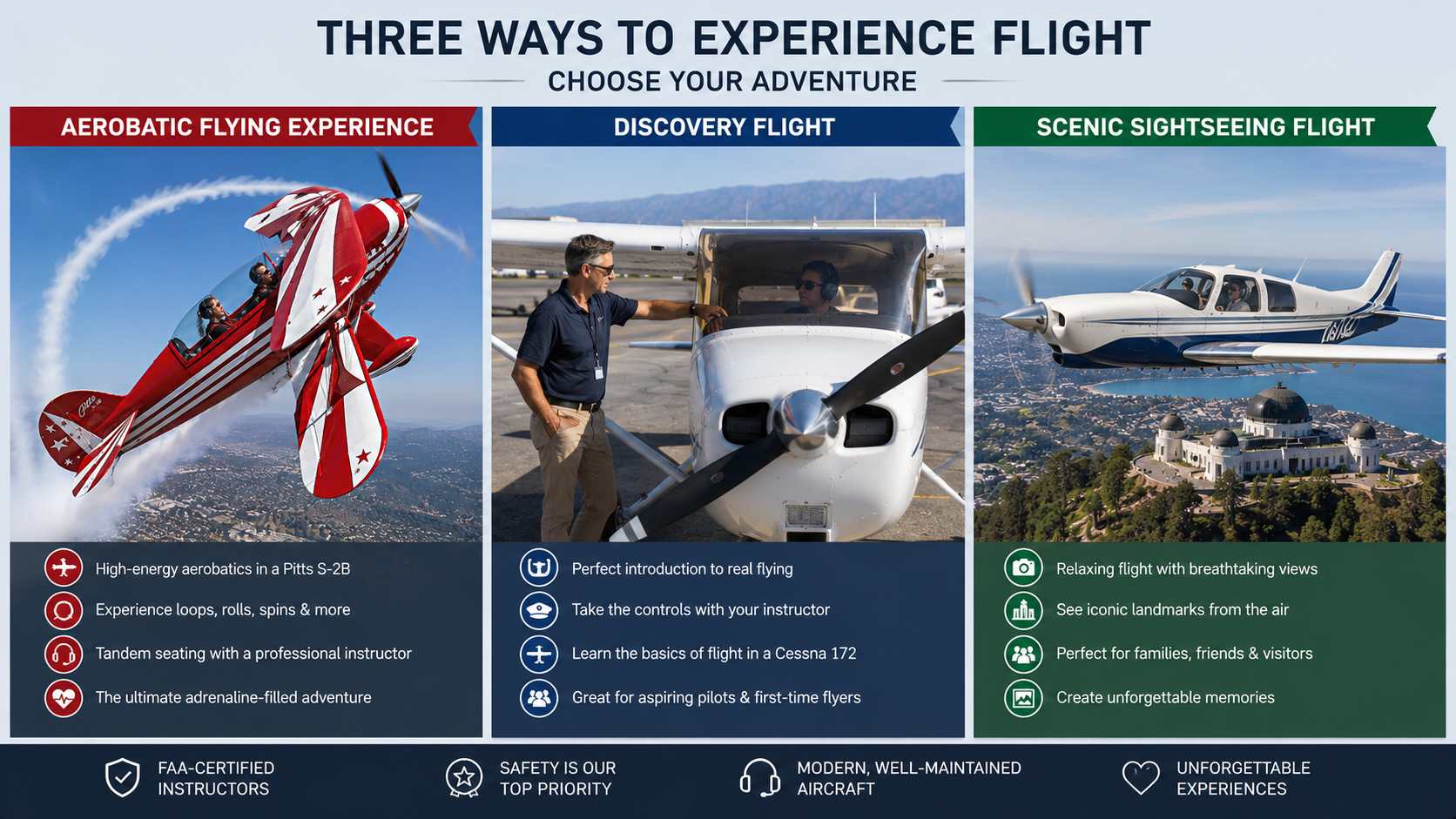
Some guests may prefer a different starting point. If you’ve never flown in a small aircraft, are prone to motion sickness, or want hands-on time at the controls, a Discovery Flight may be a better introduction. Fly Over LA’s Discovery Flight experiences start at $200 and are designed for people interested in learning more about flying itself, while aerobatic airplane rides are designed for passengers ready to experience the full maneuver sequence.
If you’re comparing options, see all flight experiences to find the experience that best matches your interests and comfort level.
Book Your Aerobatic Flying Experience Over Los Angeles
By now, you should have a clear understanding of what an aerobatic flying experience involves—from the Pitts S-2B aircraft and maneuver sequence to the preparation tips, G-forces, and safety considerations. For passengers looking for more than a traditional sightseeing flight, Fly Over LA’s Aerobatics Over LA experience provides the opportunity to experience loops, aileron rolls, and hammerheads from the rear cockpit of a purpose-built aerobatic aircraft with an FAA-certified instructor at the controls.
The experience departs from Van Nuys Airport, takes approximately one hour door-to-door, and starts at $450. It is also a popular gift for birthdays, milestone celebrations, and bucket-list adventures. Guests who want to relive the experience can add GoPro video footage for $49.99.
Ready to feel what a Pitts S-2B actually does? Book Aerobatics Over LA with Fly Over LA — FAA-certified instructor, loops, rolls, and hammerheads over the LA basin, starting at $450.
You can also see all flight experiences to compare scenic and aerobatic options, or check availability and book when you’re ready to schedule your flight.
Frequently Asked Questions
What is an aerobatic flying experience?
An aerobatic flying experience is a passenger flight that includes precision maneuvers such as loops, aileron rolls, and hammerheads. At Fly Over LA, you’ll ride in the rear cockpit of a Pitts S-2B while an FAA-certified instructor performs every maneuver. This is an experience flight, not a flight lesson.
Do I fly the plane, or does the instructor?
The instructor flies the aircraft throughout the flight. Unlike a Discovery Flight, passengers do not take the controls. The instructor remains in command at all times while you experience the maneuver sequence from the passenger seat.
What maneuvers will I experience on a stunt plane ride?
A typical stunt plane ride may include loops, aileron rolls, and hammerheads. Before each maneuver, the instructor explains what to expect through the headset. The exact sequence may vary based on conditions and the flight plan.
Is an aerobatic ride safe if I’ve never flown before?
Many guests experience aerobatic flight for the first time during their ride. Fly Over LA’s flights are conducted by FAA-certified instructors in a Pitts S-2B maintained to FAA airworthiness standards, with pre-flight inspections and weather evaluations completed before departure. Passengers with recent injuries, inner-ear conditions, or heart concerns should consult a physician before booking.
What should I eat before an aerobatic flight?
Plan to eat a light meal 2–3 hours before your flight. Fruit, crackers, toast, and other plain carbohydrates are often more comfortable than heavy, greasy, or spicy foods. Staying hydrated and avoiding alcohol on the day of your flight is also recommended.
How much does the Aerobatics Over LA experience cost?
Aerobatics Over LA starts at $450 and includes a flight in a Pitts S-2B with an FAA-certified instructor departing from Van Nuys Airport. The experience takes approximately one hour door-to-door. GoPro video footage is available as an optional add-on for $49.99.
For additional information, visit our Frequently asked questions page.
Disclaimer: This content is provided for informational and educational purposes only and does not constitute flight instruction, operational approval, or regulatory guidance. All flight training is conducted in accordance with FAA regulations and must be completed with a certified flight instructor. Individual training requirements, costs, and timelines may vary.