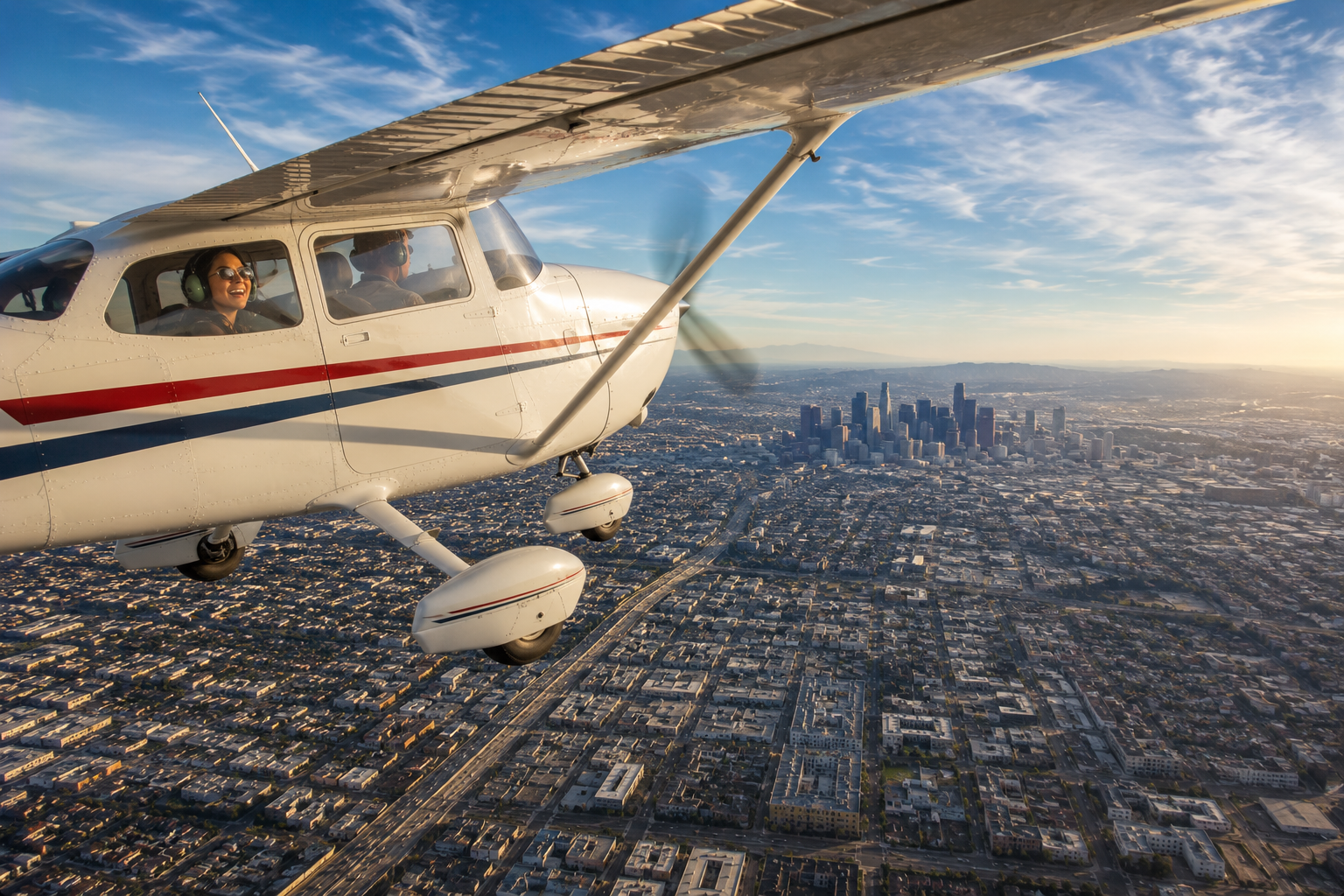
Two stacked wings. A powerful piston engine. An aircraft built not just to fly, but to perform. That’s what makes biplane flying different from almost any other aviation experience. Whether you’re drawn by aviation history, the thrill of a modern biplane flying experience, or the unique sensation of flying in a biplane, these aircraft offer a combination of character, performance, and agility that few others can match.
For many people, the appeal is equal parts historical curiosity and the desire to feel something different in the air. In this guide, we’ll explore what a biplane is, where the design came from, what makes modern aerobatic biplanes different from vintage replicas, what a ride over Los Angeles actually feels like, and how to book a biplane experience for yourself or as a gift.
What Is a Biplane? (Two Wings, One Aircraft)
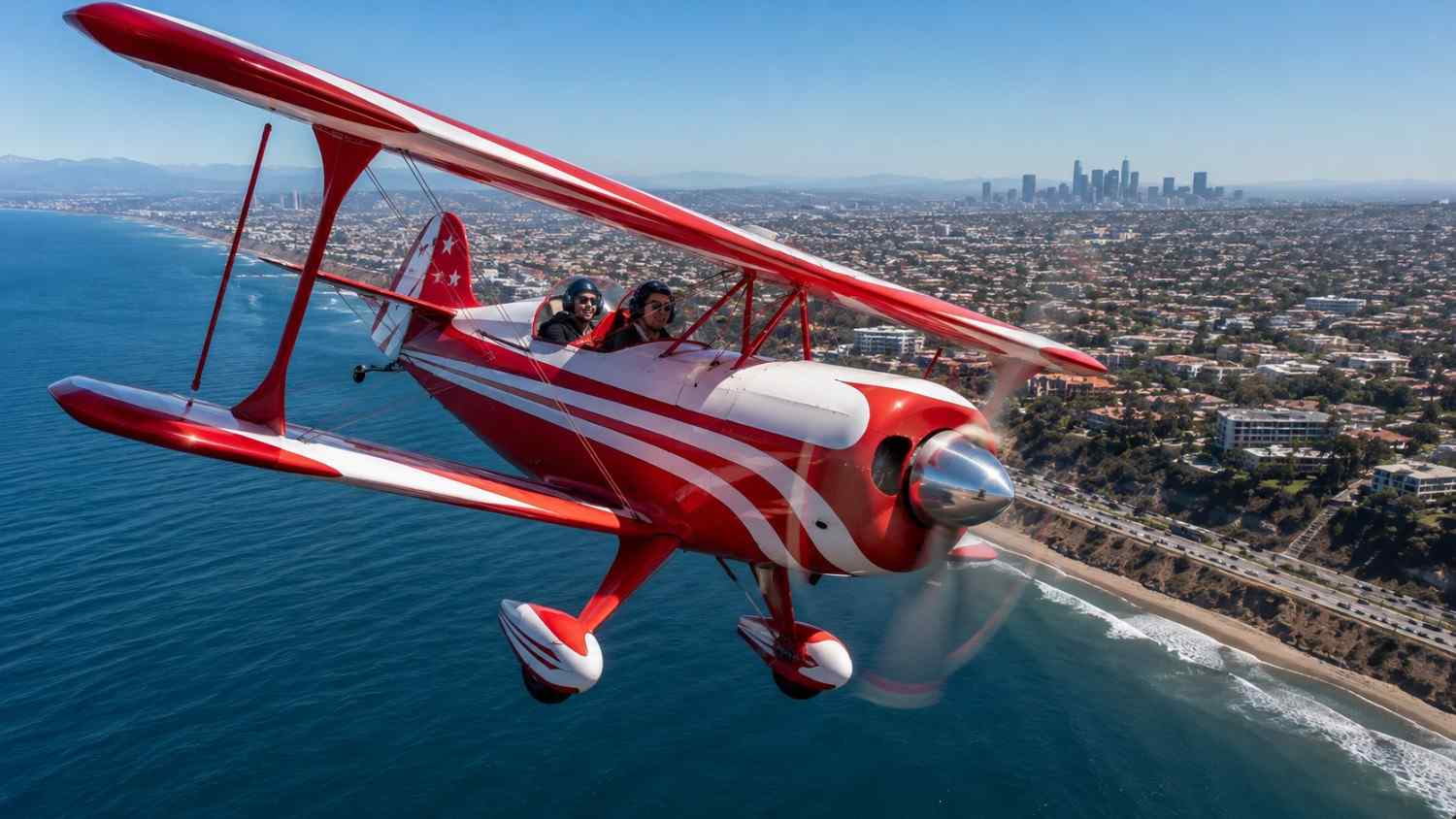
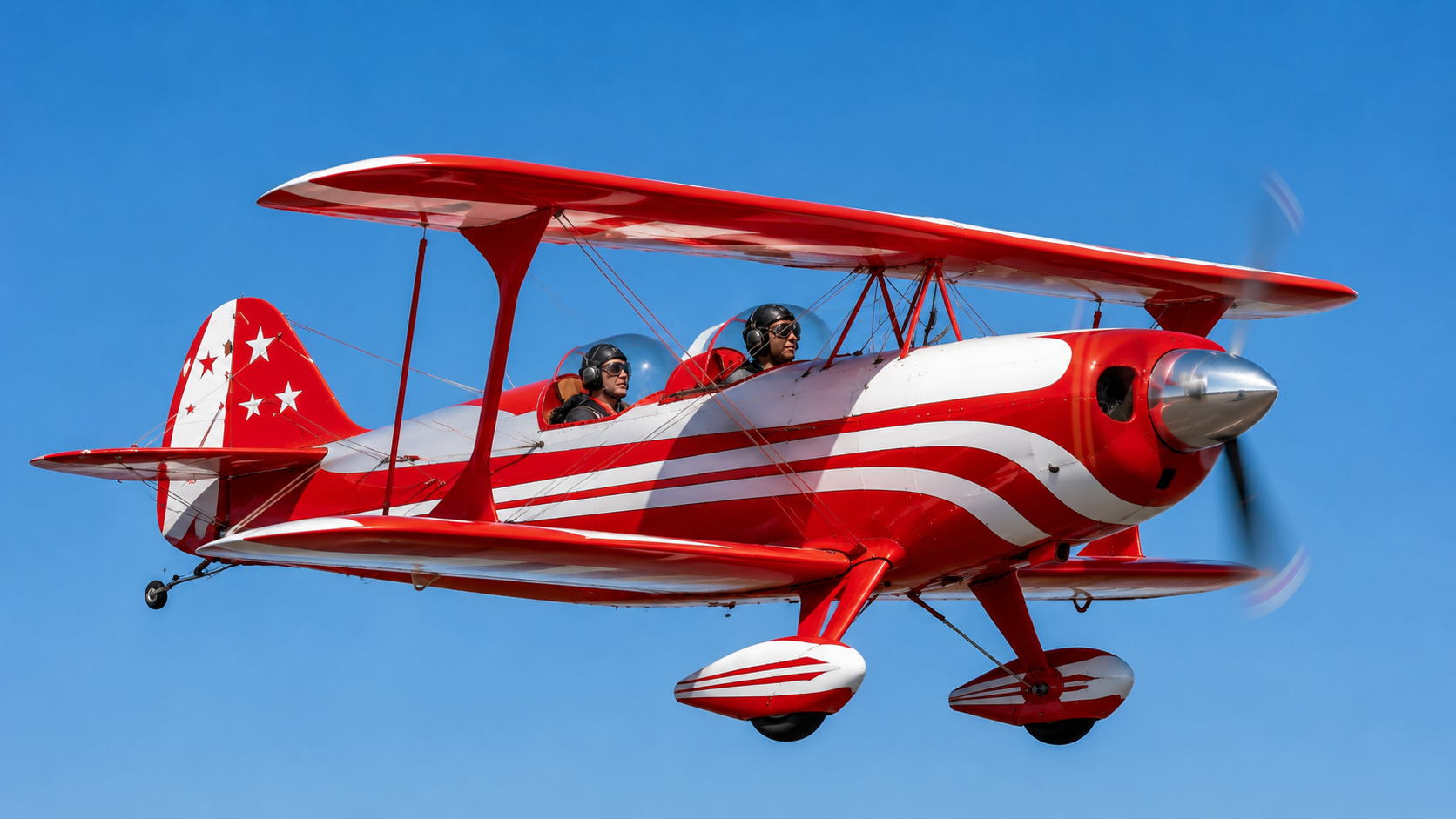
A biplane is a fixed-wing aircraft with two main wings stacked one above the other and connected by struts and bracing wires. This design creates more lift within a smaller wingspan, which helps make the aircraft compact, responsive, and capable of tighter maneuvers than many conventional aircraft.
That layout also creates a unique perspective for passengers. One of the most memorable aspects of biplane flying is sitting between the upper and lower wings during flight. Some people describe flying in a biplane as feeling like the “meat in the sandwich,” with a wing above and below creating a view unlike that of a typical airplane. Whether you’re interested in aviation history or curious about flying a biplane yourself, the dual-wing design remains one of the most recognizable and distinctive features in aviation.
A Brief History of Biplane Flight
The story of biplane flight begins with the Wright Flyer in 1903. Its two-wing design was a matter of necessity rather than preference. At the time, stacking wings provided the lift engineers needed without requiring an impractically large wingspan.
As aviation advanced, the biplane became the defining aircraft of World War I. Famous designs such as the Sopwith Camel, SPAD, and Fokker fighters combined strength, maneuverability, and relatively compact dimensions, making them effective dogfighting platforms and valuable training aircraft. Many of the aerial techniques associated with aerobatics today trace their roots to this era.
The years between the wars brought the golden age of barnstorming and air circus flying. Pilots traveled from town to town performing aerial demonstrations that introduced the public to the excitement of flight. While many people still associate biplane flying with this period, aviation technology continued moving forward.
By the late 1930s, faster and more efficient monoplanes had surpassed biplanes in most commercial and military roles. Yet the biplane survived in one specialized domain: aerobatics.
Today, the biplane you’re most likely to fly in isn’t a museum relic — it’s a purpose-built aerobatic machine.
Why Biplanes Are Still Flown Today
Modern biplanes are not museum pieces. They are purpose-engineered aerobatic machines built to perform maneuvers that demand precision, responsiveness, and control. The biplane layout creates strong lift within a compact wingspan, allowing quicker roll response and the tight handling characteristics pilots rely on for snap maneuvers and advanced aerobatics.
The experience is as physical as it is visual. At full throttle, a piston-powered flat-four engine delivers a distinctive growl and vibration that you feel throughout the aircraft. Every control input produces an immediate response, creating the connected, energetic feel that continues to define modern biplane flying.
Today’s pilot community still chooses biplanes for aerobatic competition, airshow performance, and dedicated training. The Pitts Special, designed by Curtis Pitts in the 1940s specifically for aerobatics, has won more U.S. Aerobatic Championships than any other aircraft design.
That heritage continues in modern biplane stunt flying. Rather than preserving history, these aircraft are actively used for the aerobatic biplane ride experiences that introduce new passengers to the performance, agility, and excitement that keep biplanes relevant today.
Open Cockpit vs. Enclosed: What to Expect
When many people think about flying in a biplane, they picture a vintage open-cockpit aircraft with goggles, a leather helmet, and wind rushing past their face. Those experiences still exist through operators that fly historic aircraft, but they represent a different type of airplane and a different era of aviation.
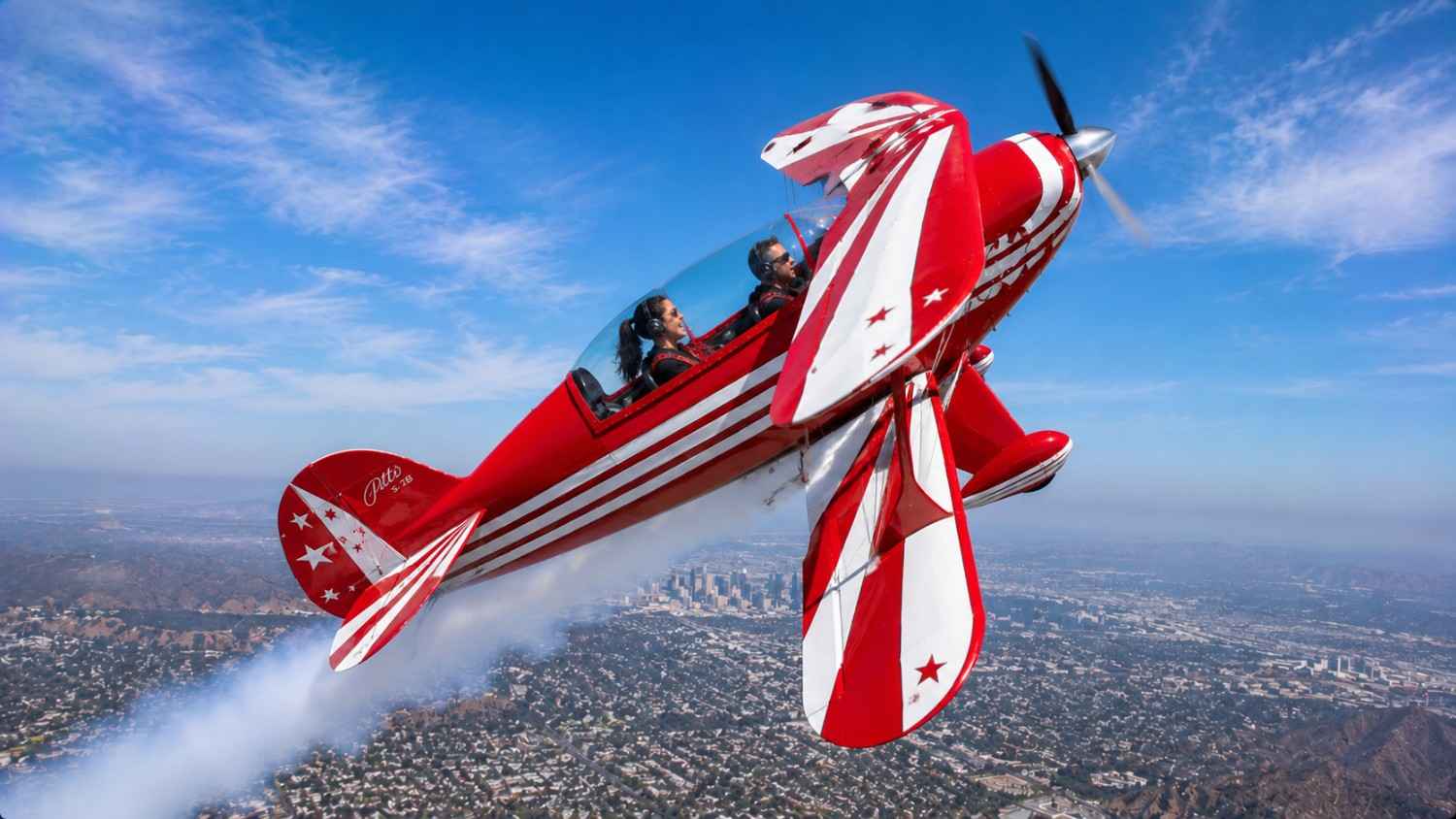
The Pitts S-2B at FlyOver LA is an enclosed-cockpit aerobatic biplane designed for performance. There is no helmet required, no constant wind battering your face, and no struggle to hear your instructor through a headset. Instead, the enclosed cockpit creates a more controlled environment focused on the flight itself.
That design is also a performance advantage. The enclosure helps the Pitts S-2B reach speeds approaching 200 mph and perform the sustained aerobatic maneuvers that define a modern biplane flying experience. Loops, rolls, and hammerheads place demands on an aircraft that traditional open-cockpit sightseeing biplanes are not designed to handle. For passengers, the result is a biplane flight experience that combines the distinctive character of a classic biplane with the speed, precision, and capability of a purpose-built aerobatic aircraft.
Inside the Pitts S-2B: Aircraft Profile
At Fly Over LA, every aerobatic biplane ride takes place in the Pitts S-2B, a purpose-built aerobatic biplane designed for performance from the start. Unlike restored vintage warbirds, the Pitts S-2B was engineered specifically for aerobatics and remains one of the most respected aircraft in biplane flying today.
The aircraft features two seats, a 260-horsepower engine, and a top speed of approximately 200 mph. Its compact design and responsive handling allow it to perform the classic maneuvers that define biplane stunt flying, including loops, rolls, and hammerheads.
The Pitts S-2B is also an FAA-type-certificated aerobatic aircraft. It was designed from scratch for aerobatic performance rather than adapted from another aircraft type, making it well suited for a modern aerobatic biplane ride.
During the experience, the passenger rides in the front seat while an FAA-certified instructor occupies the rear seat and performs all aerobatic maneuvers. The instructor remains pilot-in-command throughout the flight.
To learn more about the aircraft, visit the Pitts S-2B aircraft profile.
While the Piper J-3 Cub remains part of Fly Over LA’s fleet history, it is currently unavailable for flights due to maintenance. All current biplane flying experiences operate exclusively in the Pitts S-2B.
What a Biplane Flying Experience Actually Feels Like
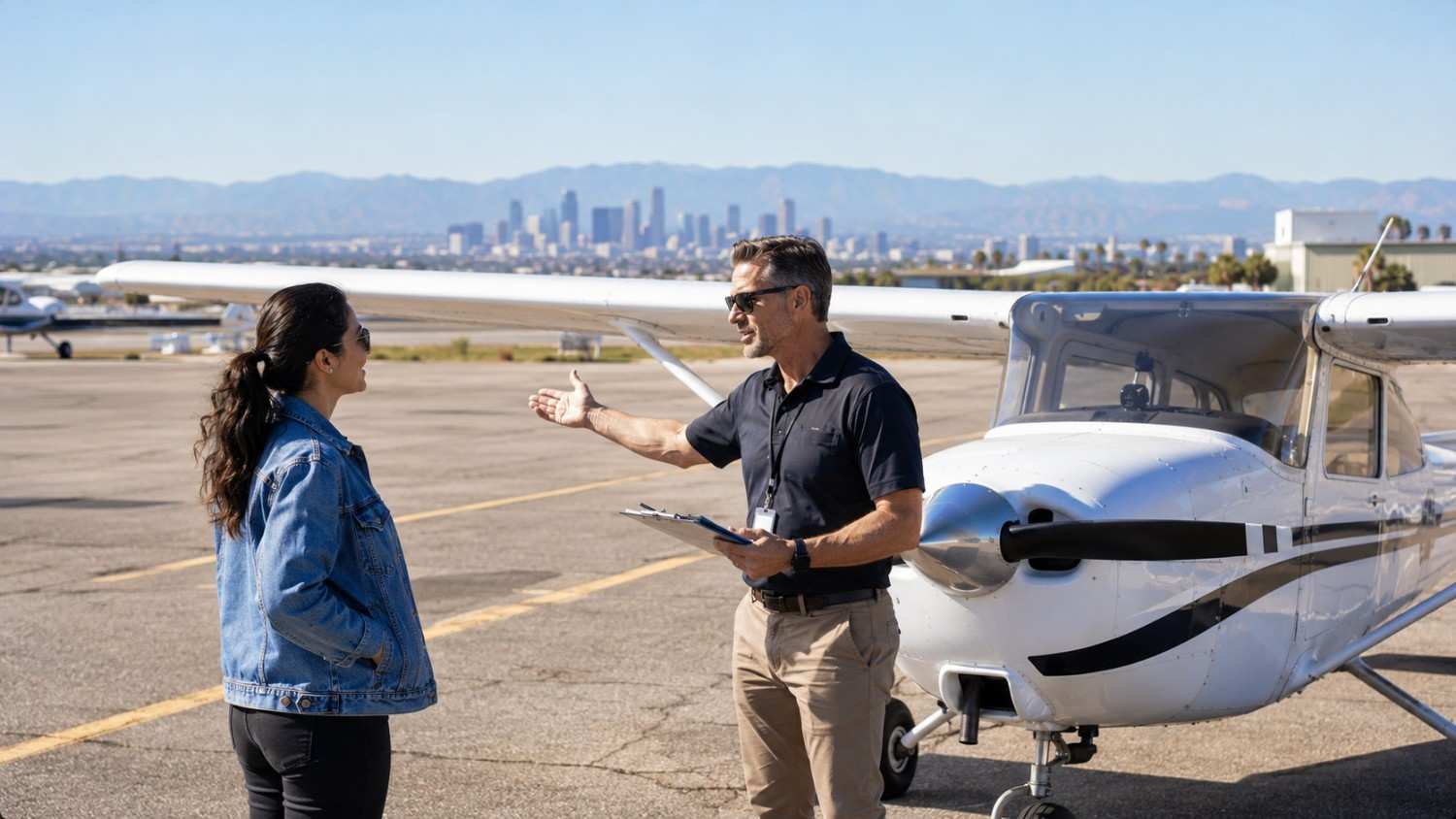
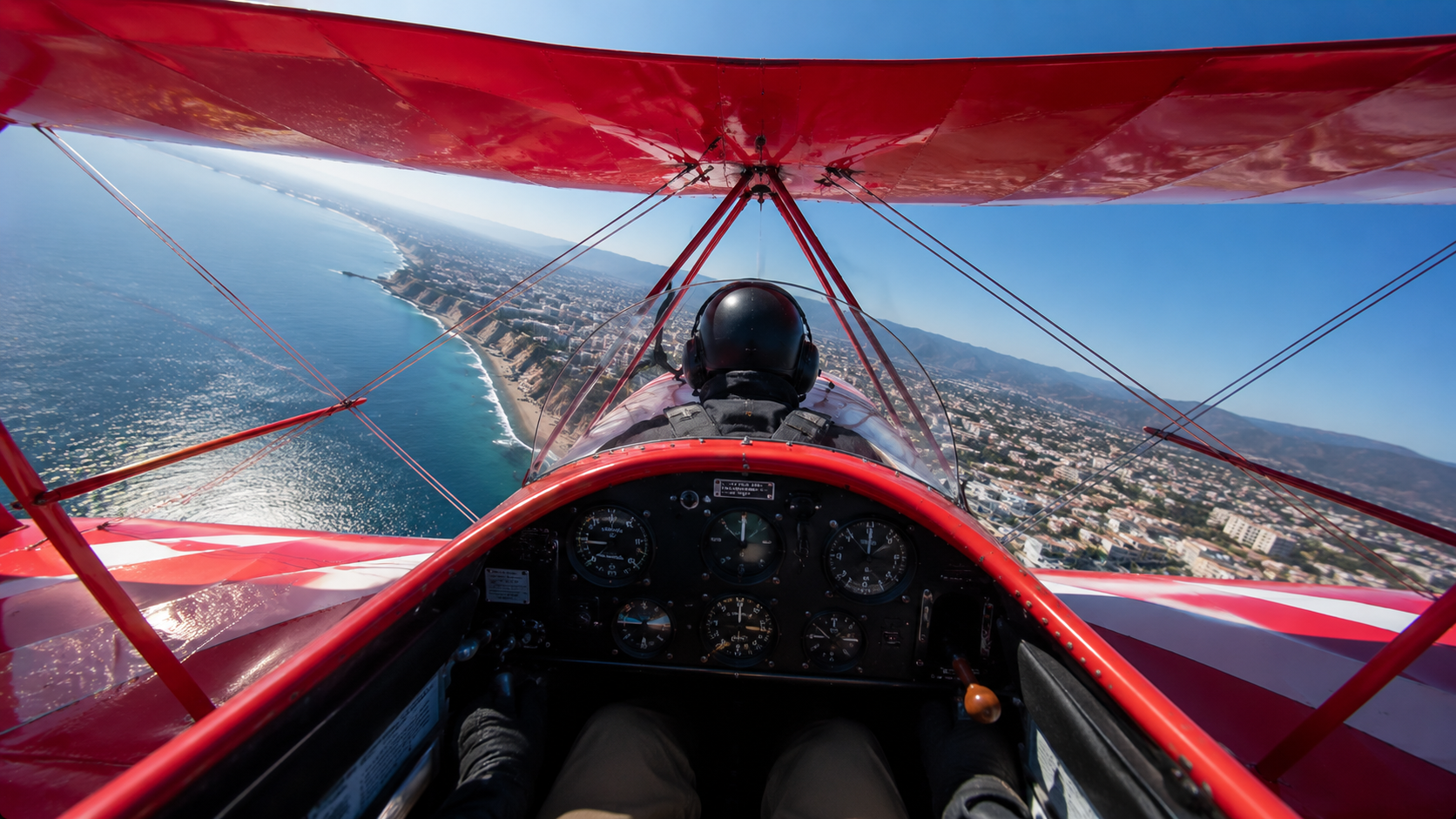
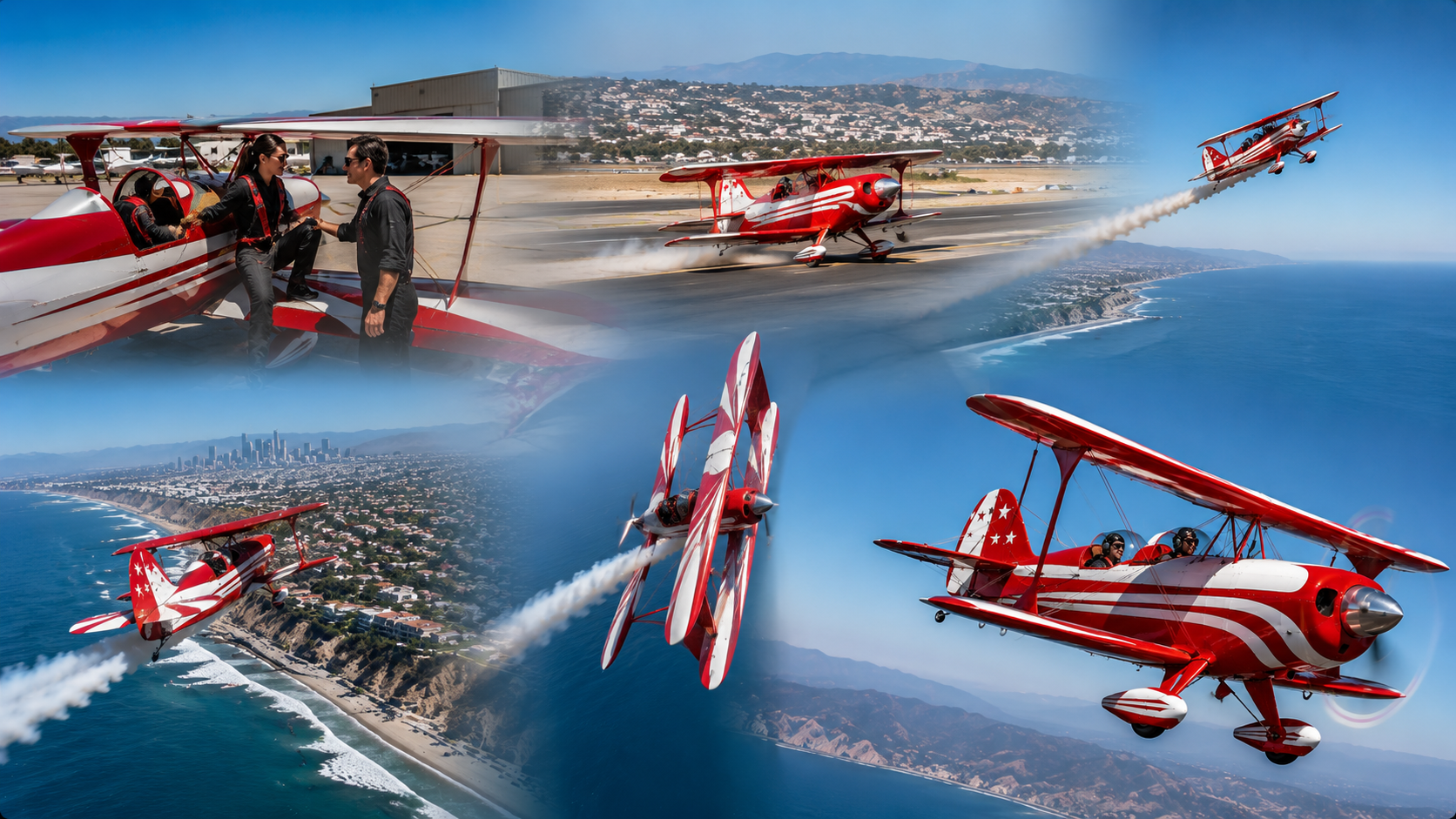
A biplane flying experience starts on the ramp at Van Nuys Airport (KVNY), where you’ll meet your FAA-certified instructor for a pre-flight briefing before walking out to the Pitts S-2B. The aircraft looks compact, purposeful, and ready to perform. After a review of the flight and planned maneuvers, you climb into the enclosed cockpit and secure your harness. There is no leather helmet, no wind rushing across your face, and no open-cockpit exposure. Instead, you’re comfortably seated in the front cockpit as the engine comes alive and the aircraft taxis toward the runway.
The acceleration is immediate. The runway begins moving faster beneath you, the aircraft gathers speed, and within moments the San Fernando Valley starts dropping away below. As the climb continues, neighborhoods, freeways, and landmarks spread across greater Los Angeles. Then the aerobatics begin. During a pull-up, positive G-forces press you firmly into the seat. During a pushover, negative G briefly releases that pressure and shifts your weight against the harness. Both sensations feel unfamiliar, controlled, and exhilarating.
Each maneuver creates a different sensation:
- Loop: The nose rises and traces a complete vertical circle through the sky. The strongest positive G arrives near the bottom of the maneuver before the aircraft returns smoothly to level flight.
- Roll: The Pitts rotates 360 degrees around its long axis while the horizon sweeps around the cockpit in one continuous motion.
- Hammerhead: The aircraft climbs steeply until forward motion nearly disappears. For a brief moment, everything seems to pause before the nose pivots downward and the flight continues.
What makes an aerobatic biplane ride unique is the combination of performance and scenery. At low altitude over the San Fernando Valley and greater Los Angeles, familiar landmarks pass below and around you at remarkable speed. You’re not simply flying in a biplane and looking at the view. You’re experiencing biplane stunt flying in an aircraft designed specifically for aerobatics. For a deeper look at the experience, explore Experience the thrill of aerial acrobatics over Los Angeles.
Booking a Biplane Ride Over Los Angeles
If you’ve made it this far, you’re probably wondering where to find a biplane flying experience in Los Angeles. Fly Over LA’s Book Aerobatics Over LA experience offers the opportunity to fly in the Pitts S-2B, a purpose-built aerobatic biplane that departs from Van Nuys Airport (KVNY). Flights start at $450 and include approximately 40 minutes in the air, along with pre-flight and post-flight ground time.
No prior flight experience is required. Every flight is conducted by an FAA-certified instructor who remains pilot-in-command throughout the experience while you ride along and enjoy the maneuvers from the front seat. Standard aerobatic eligibility requirements apply. For details regarding health considerations, weight restrictions, and participation guidelines, refer to Fly Over LA’s booking information and Frequently asked questions.
For many guests, this is more than a thrill ride. Some book for themselves after years of curiosity about aerobatic flying. Others choose it as a gift for birthdays, anniversaries, graduations, or milestone celebrations. All experiences can be purchased through online checkout, and a GoPro Video & Pictures package is available for $49.99 if you’d like to capture the flight from takeoff to landing.
Getting started is simple:
- Check eligibility requirements.
- Choose your experience.
- Book online.
- Arrive at Van Nuys Airport (KVNY) for your flight.
If you’d like to explore your options before booking, you can See all flight experiences, Meet the fleet, or review the Pitts S-2B aircraft profile.
Ready to see Los Angeles from the front seat of a purpose-built aerobatic biplane? Book Aerobatics Over LA starting at $450. All flights depart Van Nuys Airport with an FAA-certified instructor. You can also Check availability and book online today.
Frequently Asked Questions
What is the difference between a biplane and a regular airplane?
The main difference is the wing design. A biplane has two wings stacked one above the other, connected by struts and bracing wires, while most modern airplanes use a single-wing configuration. The additional wing area helps create lift within a compact wingspan and contributes to the responsive handling that makes biplane flying and aerobatic performance possible.
Is biplane flying safe for passengers with no aviation experience?
Yes. Fly Over LA’s biplane flying experiences are conducted by FAA-certified instructors, and no prior aviation experience is required. Before departure, you’ll receive a pre-flight briefing covering safety procedures, the planned maneuvers, and what to expect during the flight. The instructor remains pilot-in-command throughout the experience.
Does the Pitts S-2B have an open or enclosed cockpit?
The Pitts S-2B used for Fly Over LA’s aerobatic flights features an enclosed cockpit. There is no open-air exposure, helmet requirement, or wind rushing through the cabin. The enclosed design also supports the aircraft’s higher-performance capabilities, including aerobatic maneuvers and speeds approaching 200 mph.
What aerobatic maneuvers can I expect on a biplane ride over Los Angeles?
A typical aerobatic biplane ride may include loops, rolls, and hammerheads. During a loop, the aircraft traces a complete vertical circle through the sky. During a roll, it rotates 360 degrees around its long axis. During a hammerhead, the aircraft climbs steeply before pivoting and descending. Maneuvers may vary based on conditions and instructor discretion.
How much does a biplane flying experience in Los Angeles cost?
Fly Over LA’s Aerobatics Over LA experience starts at $450 and departs from Van Nuys Airport (KVNY). The experience includes approximately 40 minutes of flight time, plus pre-flight and post-flight ground activities. Guests can also add a GoPro Video & Pictures package for $49.99.
Can I buy a biplane flight as a gift?
Yes. A biplane flight experience is a popular gift for birthdays, anniversaries, graduations, holidays, and other special occasions. Fly Over LA offers giftable experiences through online checkout, making it easy to purchase an aerobatic biplane ride for someone else.
Disclaimer: This content is provided for informational and educational purposes only and does not constitute flight instruction, operational approval, or regulatory guidance. All flight training is conducted in accordance with FAA regulations and must be completed with a certified flight instructor. Individual training requirements, costs, and timelines may vary.