Are Small Private Planes Safe? What LA Flyers Should Know Before Booking
Introduction
Many people feel a spike of unease when they imagine boarding a four-seat aircraft instead of a wide-body jet, and that reaction is worth taking seriously. Questions such as are small private planes safe, how safe are small planes, are light aircraft safe, and how safe are small private planes are common among first-time flyers, gift recipients, and family members researching a flight experience. If you’re considering a scenic or discovery flight, including the opportunity to book your Discovery Flight over Los Angeles, it’s reasonable to want clear, evidence-based answers before making a decision.
This article takes an honest look at the question using information and guidance from the FAA, NTSB, and AOPA. We’ll examine what actually influences safety in general aviation, including the aircraft, the instructor, pre-flight inspections, weather decision-making, and in-flight procedures. We’ll also address common concerns about engine failures, turbulence, and weather, and explain what all of this means for someone preparing for a first flight over Los Angeles from Van Nuys Airport (KVNY).
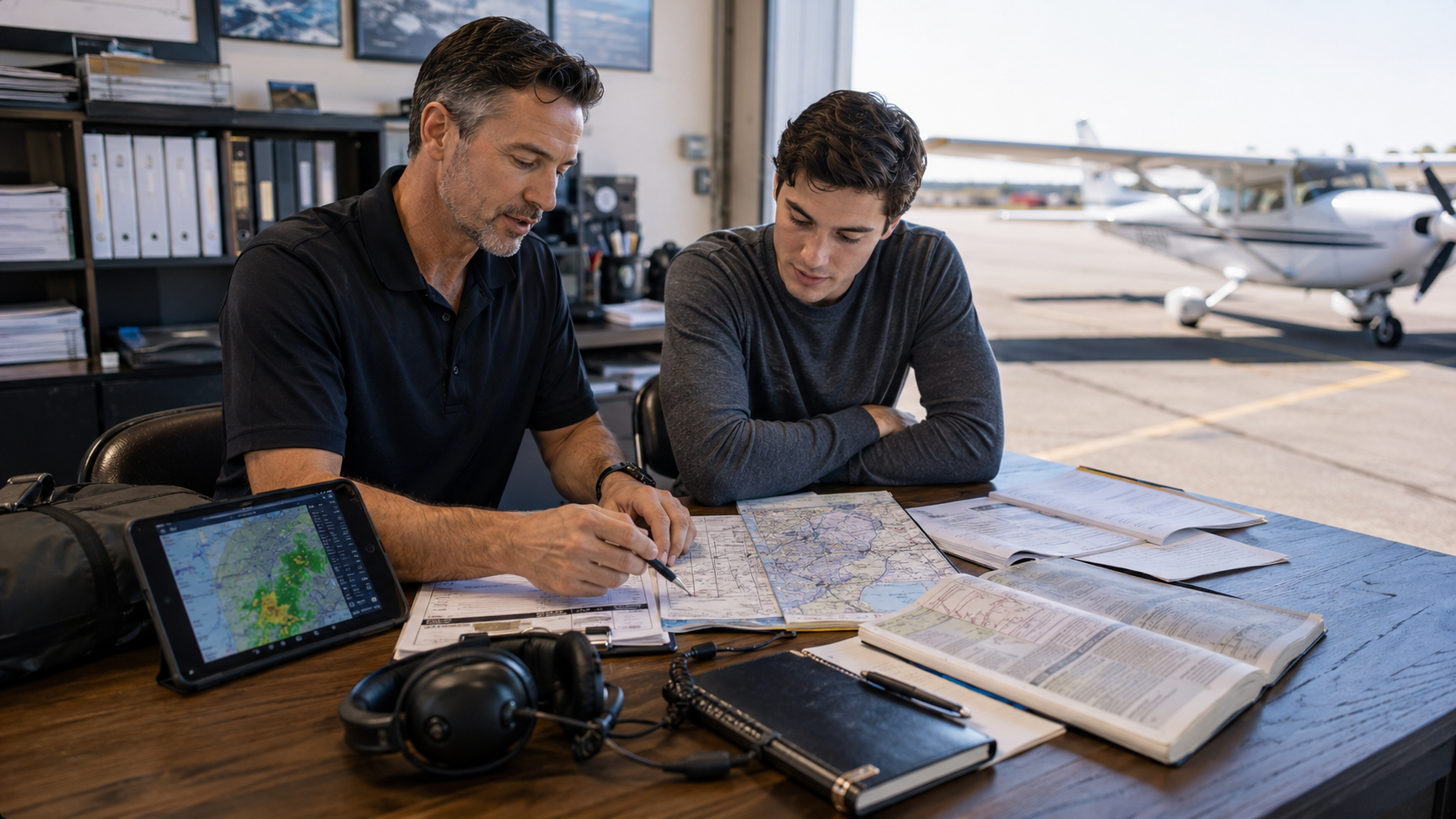
The Honest Answer to “Are Small Private Planes Safe?”
The honest answer is that general aviation has a higher accident rate than commercial aviation. The NTSB and AOPA Air Safety Institute both make that distinction clear, and it’s important to acknowledge it directly.
The context matters. According to NTSB data, general aviation accident rates have declined steadily over the past two decades, and the gap between commercial and general aviation has narrowed over time. AOPA Air Safety Institute has also reported that most general aviation accidents are linked to pilot decision-making factors—such as weather, fuel management, or operational choices—rather than mechanical failure.
The type of flying matters as well. A solo student pilot flying in marginal weather presents a different risk profile from an FAA-certified instructor conducting a supervised flight in a well-maintained aircraft at a flight school operating under FAA oversight.
When people ask, “Are small private planes safe?”, “How safe are small private planes?”, “How safe are small planes?”, or “Are light aircraft safe?”, they’re often grouping very different operations into a single category. The aircraft, the pilot, and the operating environment all influence risk.
The goal is not to offer guarantees or dismiss concerns. It’s to understand what the data says and what factors contribute to safer flight operations.
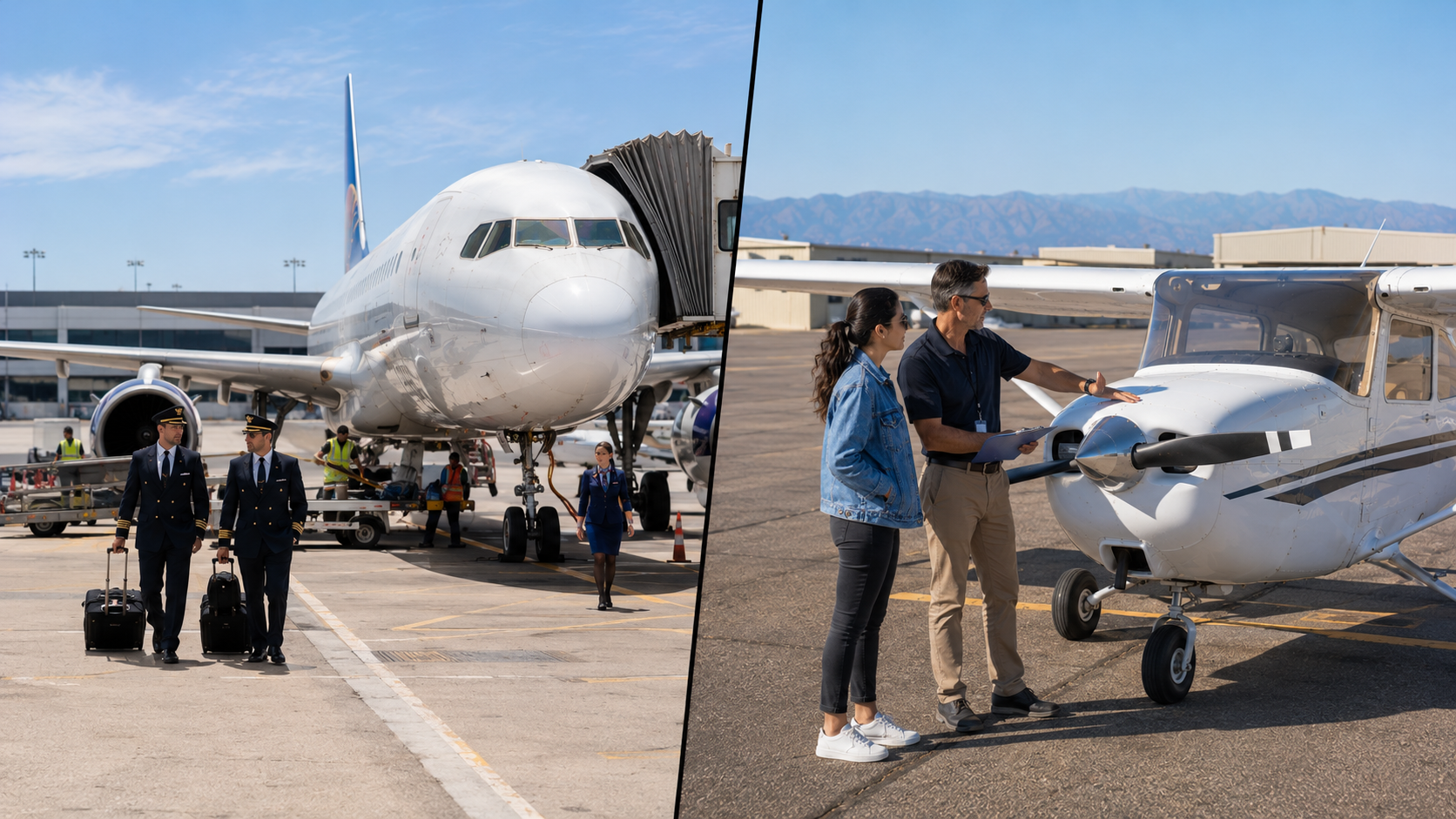
Commercial Airlines vs. General Aviation: Are Smaller Planes Safer?
One of the most common questions prospective flyers ask is: are smaller planes safer?
The answer depends on more than aircraft size. Commercial airlines operate under FAA Part 121 regulations, while most Discovery Flights and flight-training operations operate under Part 91 or Part 141 regulations.
Commercial aviation achieves its safety record through extensive standardization, including:
- FAA-required crew training
- Structured maintenance programs
- Operational oversight
- Multiple layers of system redundancy
General aviation does not replicate those systems at the same scale. Instead, safety is built through certification, training, maintenance, and operational discipline at the individual level.
It’s also important to recognize that “small planes” are not one category. A certified flight school operating under Part 141 standards with FAA-certified instructors, regular maintenance, and weather-based rescheduling presents a different risk profile from an unsupervised recreational pilot flying at night or in marginal weather.
When people ask, “Are small private planes safe?” they’re often grouping very different operations together. For someone considering a Discovery Flight with a certified operator, that context matters. The question is not simply whether an aircraft is small, but how the flight is conducted, maintained, and supervised.
What the Data Actually Says (FAA, NTSB, AOPA)
When people ask, “Are small private planes safe?” the most useful place to start is with the organizations that track aviation safety: the FAA, NTSB, and AOPA Air Safety Institute.
According to NTSB data, general aviation accident rates have declined over the past two decades. The risk has not disappeared, but the long-term trend shows continued improvement.
FAA and AOPA reporting also show that most general aviation accidents involve pilot decision-making factors such as weather, fuel management, and pilot currency rather than catastrophic mechanical failure. That distinction is important when evaluating how safe are small planes and whether are light aircraft safe compared to common perceptions.
The AOPA Air Safety Institute publishes the annual Nall Report, which tracks general aviation accident trends and contributing factors across the industry.
Aircraft reliability also plays a role. Training aircraft such as the Cessna 172 have decades of operational history and continuous refinement behind them, making them among the most established platforms in general aviation.
Taken together, the data supports cautious optimism rather than blanket reassurance. The risk is real, but the trend is improving, the contributing factors are well understood, and general aviation safety continues to advance.
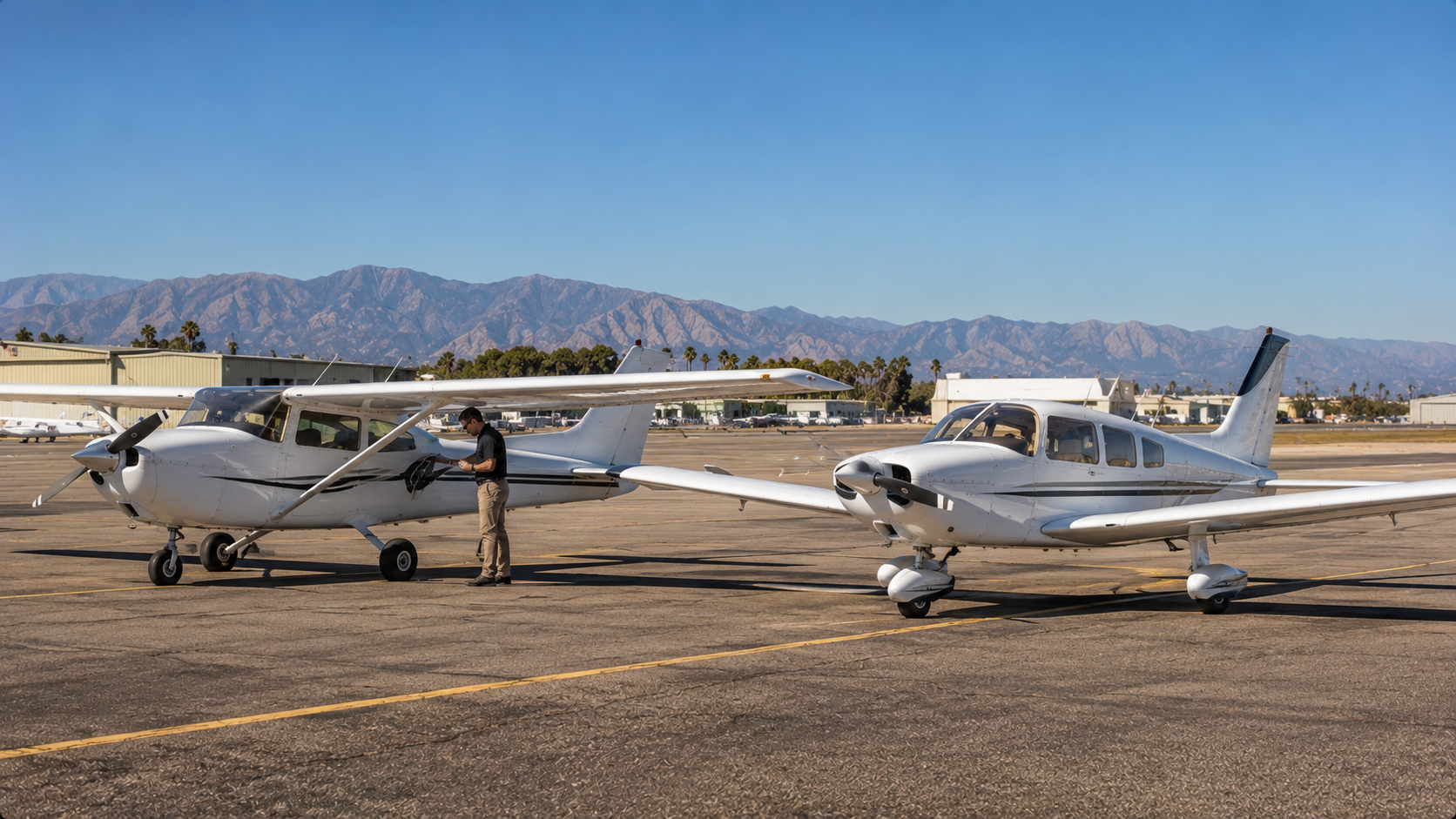
The Aircraft: Cessna 172 and Piper Archer II
The aircraft used for a Discovery Flight are established training platforms with long operational histories, documented maintenance requirements, and proven records in general aviation.
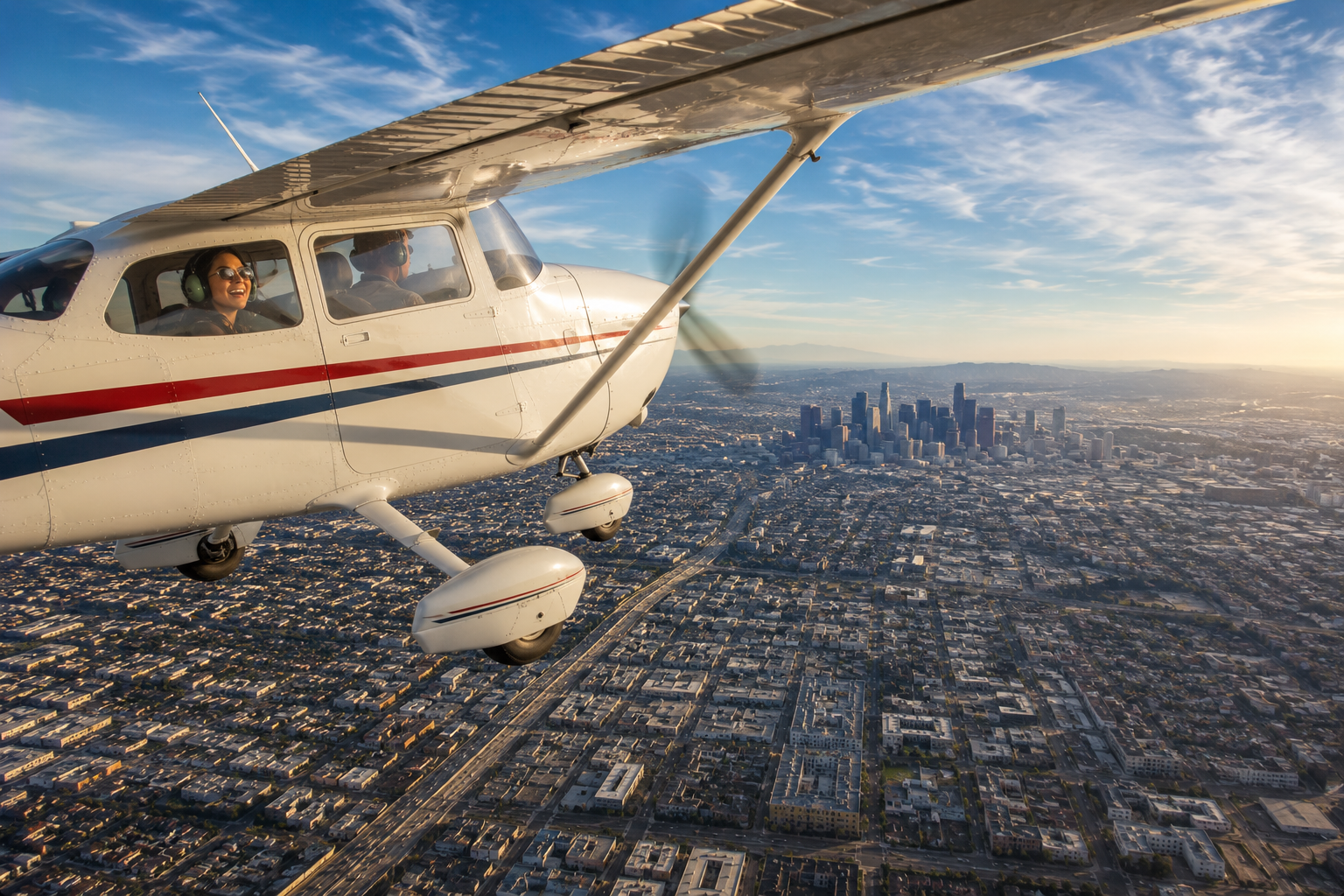
The Cessna 172N (N990B) is one of the most-produced aircraft in history. Its high-wing design provides panoramic visibility and inherent stability, making it a common choice for training and introductory flights. Powered by a 160-horsepower engine and capable of speeds around 140 mph, it has a well-documented airworthiness record. You can learn more about the aircraft on Fly Over LA’s meet the Cessna 172 page.
The Piper Archer II (N840IS) is another widely used training aircraft. Its low-wing design offers a different flying experience while maintaining the predictable handling characteristics valued by instructors and flight schools. Powered by a 180-horsepower engine and capable of speeds around 145 mph, it has a strong safety record built through decades of certified training use. Additional details are available on the meet the Piper Archer II page.
Both aircraft undergo FAA-mandated maintenance, including annual inspections performed by certified mechanics, along with any additional maintenance required to remain airworthy.
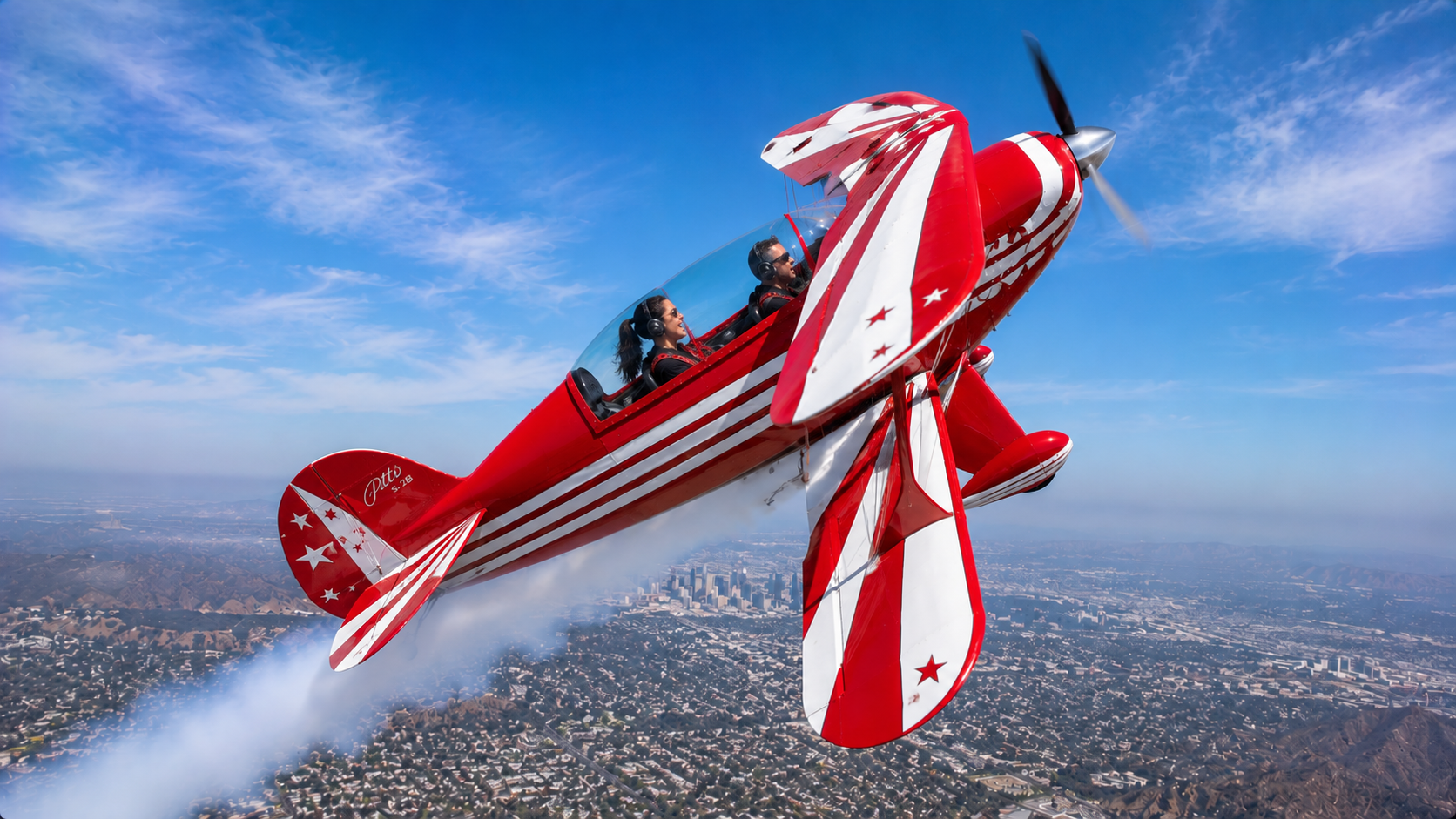
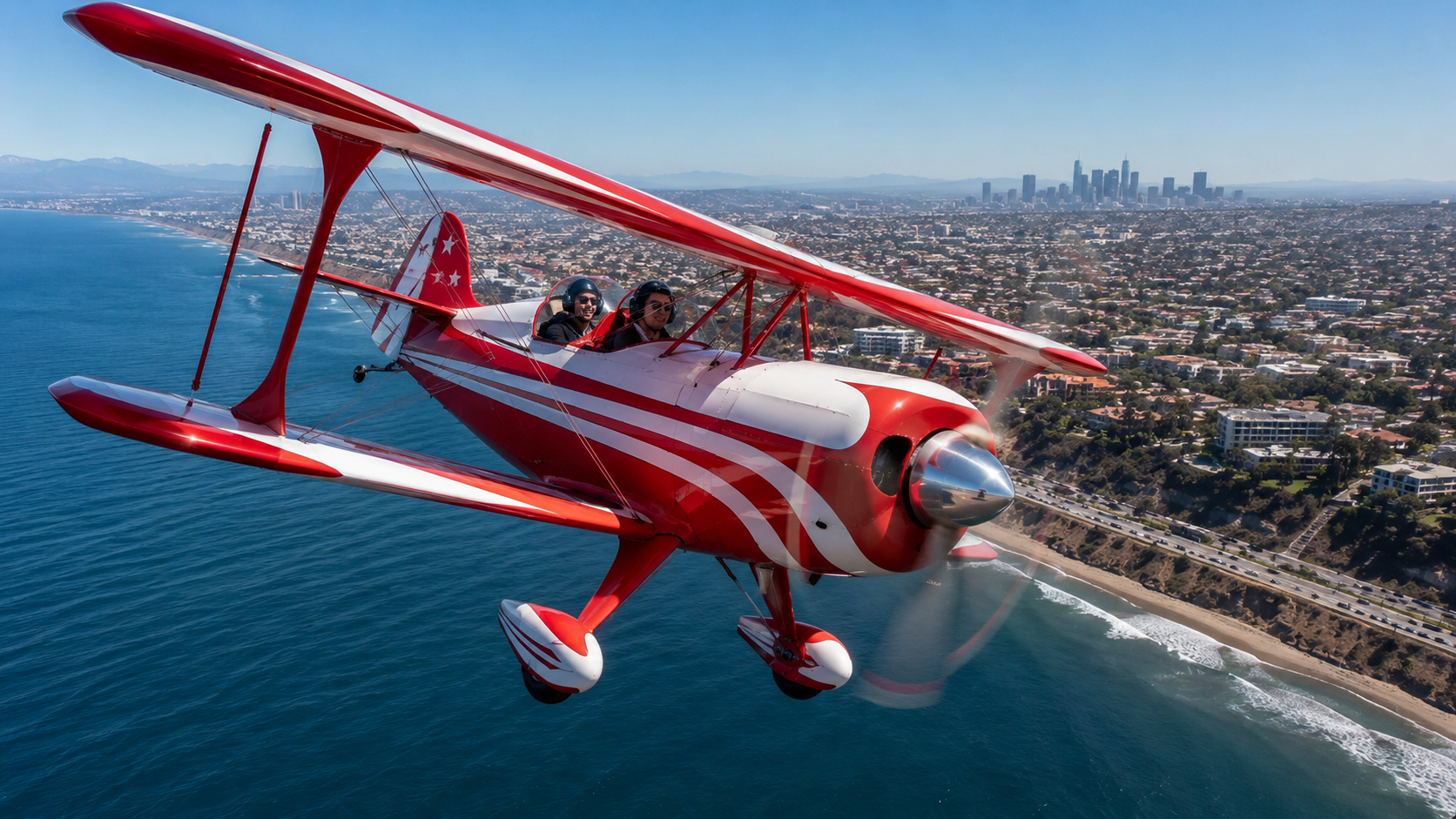
For completeness, Fly Over LA also operates the Pitts S-2B for Aerobatics Over LA experiences. Unlike the Cessna 172N and Piper Archer II, the Pitts S-2B is certified for the aerobatic flight envelope and operates in a different category than a standard Discovery Flight.
The key point for first-time flyers is that these are not random rental aircraft. They are named, certificated, and maintained aircraft operated from a fixed base under FAA oversight.
The Pilot: FAA-Certified Instructors, Medicals, and Dual Controls
The instructor flying the aircraft is one of the most important parts of the safety equation.
Becoming an FAA-certified flight instructor (CFI) requires far more than earning a pilot certificate. Instructors complete:
- Ground school and aviation knowledge training
- FAA written examinations and flight tests
- Instrument training
- A CFI checkride with an FAA examiner
The process is designed to evaluate flying ability, judgment, risk management, and the ability to supervise other pilots safely.
Flight instructors must also hold a valid FAA medical certificate and renew it according to FAA requirements, confirming they meet established standards for fitness to fly.
Every Fly Over LA training aircraft is equipped with dual controls. The instructor can take control immediately at any point during the flight. Even during a Discovery Flight, the instructor remains in command and the passenger is never flying alone.
Some prospective flyers worry that an unfamiliar pilot could be careless or underprepared. That concern is understandable in an unvetted environment. A certificated instructor operating within a supervised flight school is a different situation, with FAA certification, training standards, and operational oversight in place.
For anyone asking whether are small private planes safe, the qualifications of the instructor are a key part of the answer.
Pre-Flight Safety: How Every Flight Begins
Long before the engine starts, safety procedures are already underway.
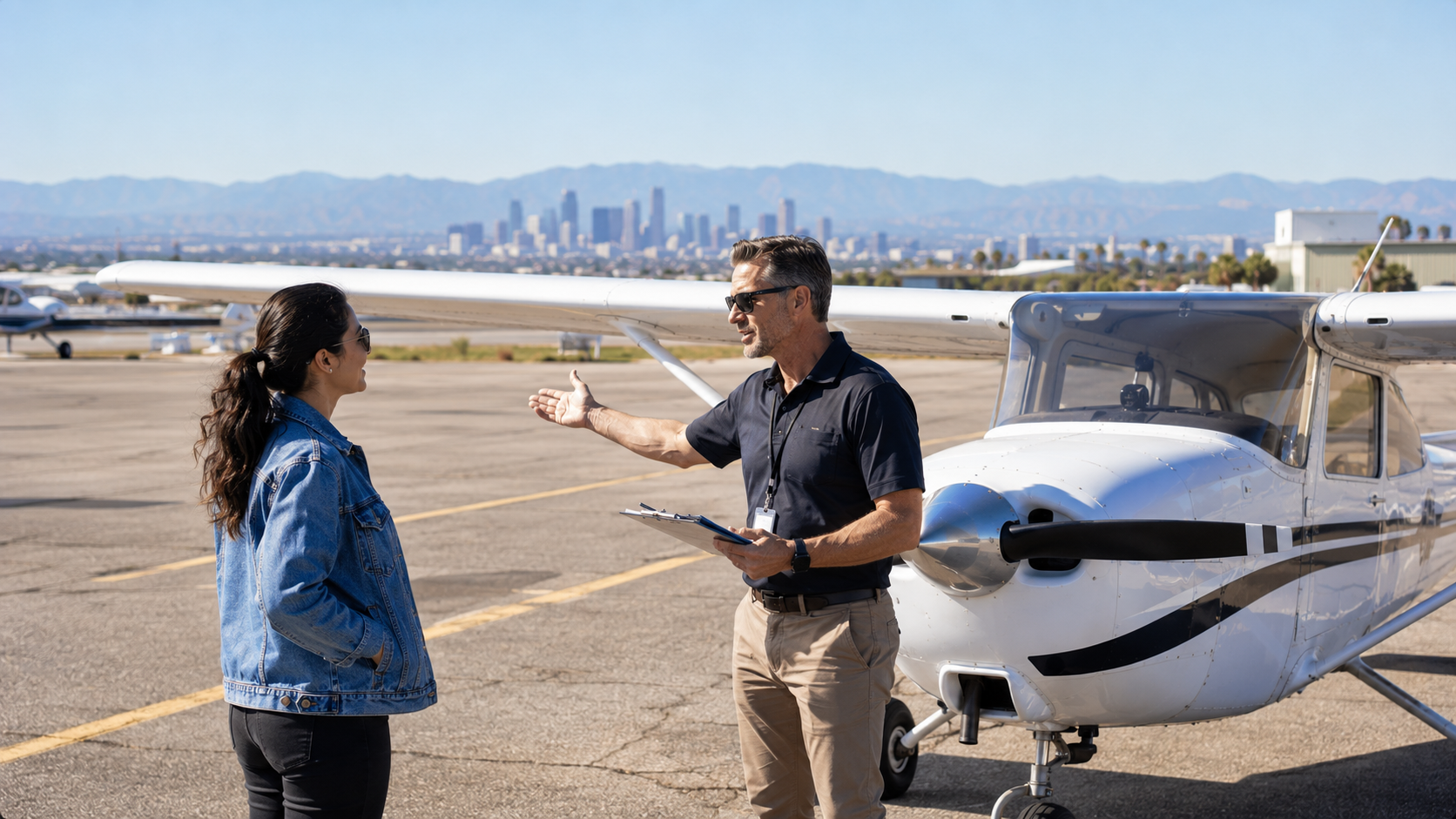
Every flight begins with a standardized preflight inspection. Following an established checklist, the instructor inspects the aircraft’s:
- Fuel levels
- Control surfaces
- Engine and oil
- Tires
- Avionics
The goal is to identify potential issues before the aircraft leaves the ground.
Weather evaluation is another essential step. Discovery Flights operate under Visual Flight Rules (VFR), which require specific visibility and cloud-clearance minimums. If conditions do not meet those minimums, the flight is rescheduled. No exceptions. Weather minimums exist precisely because the stakes are high.
Before boarding, the instructor provides a passenger briefing covering emergency procedures, seatbelts, aircraft exits, and what to expect during the flight.
For anyone wondering how safe are small planes before flying small plane for the first time, the pre-flight process is not bureaucracy. It is a critical safety layer that distinguishes a certificated operation from informal flying.
In-Flight Safety: Weather Minimums, Communication, and Emergency Procedures
Safety procedures continue throughout the flight.
During a Discovery Flight, instructors maintain radio communication and remain in contact with Air Traffic Control (ATC) when required. Radio contact throughout the flight helps maintain situational awareness and coordinate with other aircraft operating in the area. Flights operate under Visual Flight Rules (VFR), which establish minimum visibility and cloud-clearance requirements. Instructors continuously monitor weather conditions and make operational decisions accordingly.
Flight instructors also train extensively for emergency situations, including:
- Engine-out scenarios
- Emergency landings
- System failures and malfunctions
These procedures are practiced during training and reviewed regularly throughout an instructor’s flying career.
This content is provided for informational and educational purposes only and does not constitute flight instruction, operational approval, or regulatory guidance. All flight training is conducted in accordance with FAA regulations and must be completed with a certified flight instructor. Individual training requirements, costs, and timelines may vary.
For readers asking are small private planes safe, how safe are small private planes, or are light aircraft safe, these in-flight procedures are part of the operational framework designed to help manage risk throughout the flight.
Common Fears Addressed: Engine Failure, Turbulence, Weather, Incapacitation
Many first-time flyers arrive with the same questions. Understanding how these situations are addressed helps provide useful context when evaluating how safe are small planes and how safe are small private planes.
Engine Failure: Modern training aircraft engines are mechanically simple and rigorously maintained under FAA requirements. While engine failures can occur, they are rare. A single-engine aircraft glides; it does not drop. Instructors regularly practice engine-out procedures and emergency landings. At altitude, engine failures are often survivable when established procedures are followed.
Turbulence: Light turbulence is a normal part of flying. It can be uncomfortable, particularly in smaller aircraft, but discomfort and danger are not the same thing. Instructors select routes and altitudes that help avoid significant convective activity, and the flight is rescheduled if conditions are not appropriate.
Weather: Visual Flight Rules (VFR) require good visibility and clear-of-cloud conditions. A certificated instructor will not depart in marginal weather. If weather conditions do not meet established minimums, the flight is rescheduled.
Pilot Incapacitation: Every Fly Over LA Discovery Flight is conducted with an FAA-certified instructor on board. Dual controls mean the instructor is always present and capable of taking over immediately if necessary. This is not the same as a solo recreational flight.
These procedures do not eliminate risk, but they reflect the training, maintenance standards, and operational discipline that shape a professional flight operation.
What This Means for Your First Flight Over LA
After reviewing the data, the aircraft, the instructors, and the procedures, a common theme emerges: safety is not built on a single factor. It comes from layers of training, maintenance, operational discipline, and decision-making working together.
A FlyOver LA Discovery Flight brings those layers together in a real-world setting. You’ll fly with an FAA-certified instructor, complete a preflight walkthrough, and depart Van Nuys Airport (KVNY) in either a Cessna 172N or Piper Archer II. Along the way, you may see the Hollywood Sign, the Pacific coastline, Downtown Los Angeles, and the San Fernando Valley from a perspective few visitors and locals experience.
For readers who have made it this far, the next step is not committing to aviation as a hobby. It’s simply experiencing those procedures firsthand during a guided, instructor-led flight. You can learn more through Your first time flying — the ultimate LA Discovery Flight guide or explore the Sunset Discovery Flight experience.
Ready to see for yourself? Book your Discovery Flight over Los Angeles with Fly Over LA. Every flight includes an FAA-certified instructor, a Cessna 172 or Piper Archer II, and a preflight walkthrough before departure from Van Nuys Airport. When you’re ready, Check availability and book.
Frequently Asked Questions
Are small private planes more dangerous than commercial airliners?
Commercial airlines operate under FAA Part 121 regulations with extensive standardization, crew training, and operational oversight. General aviation operates under a different framework, so the comparison is not one-to-one. General aviation has a higher accident rate than commercial aviation, but NTSB data shows accident rates have declined over the past two decades. Risk also varies significantly based on the type of operation, aircraft, and pilot qualifications.
What makes a certified flight school safer than recreational general aviation?
A certified flight school follows structured procedures for training, maintenance, weather evaluation, and flight operations. Aircraft are maintained according to FAA requirements, instructors complete extensive certification and testing, and flights are conducted using standardized checklists. That differs from a recreational pilot operating independently without the same level of supervision and operational structure.
What happens if the engine fails on a small plane?
Aircraft such as the Cessna 172N and Piper Archer II are designed to glide if engine power is lost. That gives the pilot time to select a suitable landing area and follow established emergency procedures. Flight instructors regularly train for engine-out scenarios and emergency landings as part of their certification and ongoing proficiency requirements.
How do pilots decide whether it’s safe to fly?
Every flight begins with an evaluation of the aircraft, weather, and operational conditions. Instructors review visibility, cloud conditions, aircraft systems, fuel status, and other safety factors before departure. If conditions do not meet Visual Flight Rules (VFR) minimums, the flight is rescheduled.
Can I fly if I’m nervous or have never been in a small plane before?
Many Discovery Flight participants are first-time flyers. Before departure, your instructor will explain the aircraft, review safety procedures, answer questions, and conduct a preflight briefing so you understand what to expect before the flight begins.
What aircraft will I fly in on a FlyOver LA Discovery Flight?
Most Discovery Flights are conducted in either the Cessna 172N (N990B) or Piper Archer II (N840IS), depending on scheduling and availability. Both are certificated training aircraft widely used throughout general aviation and maintained in accordance with FAA requirements.